

 01
985million tonnes of milk produced worldwide in 2024
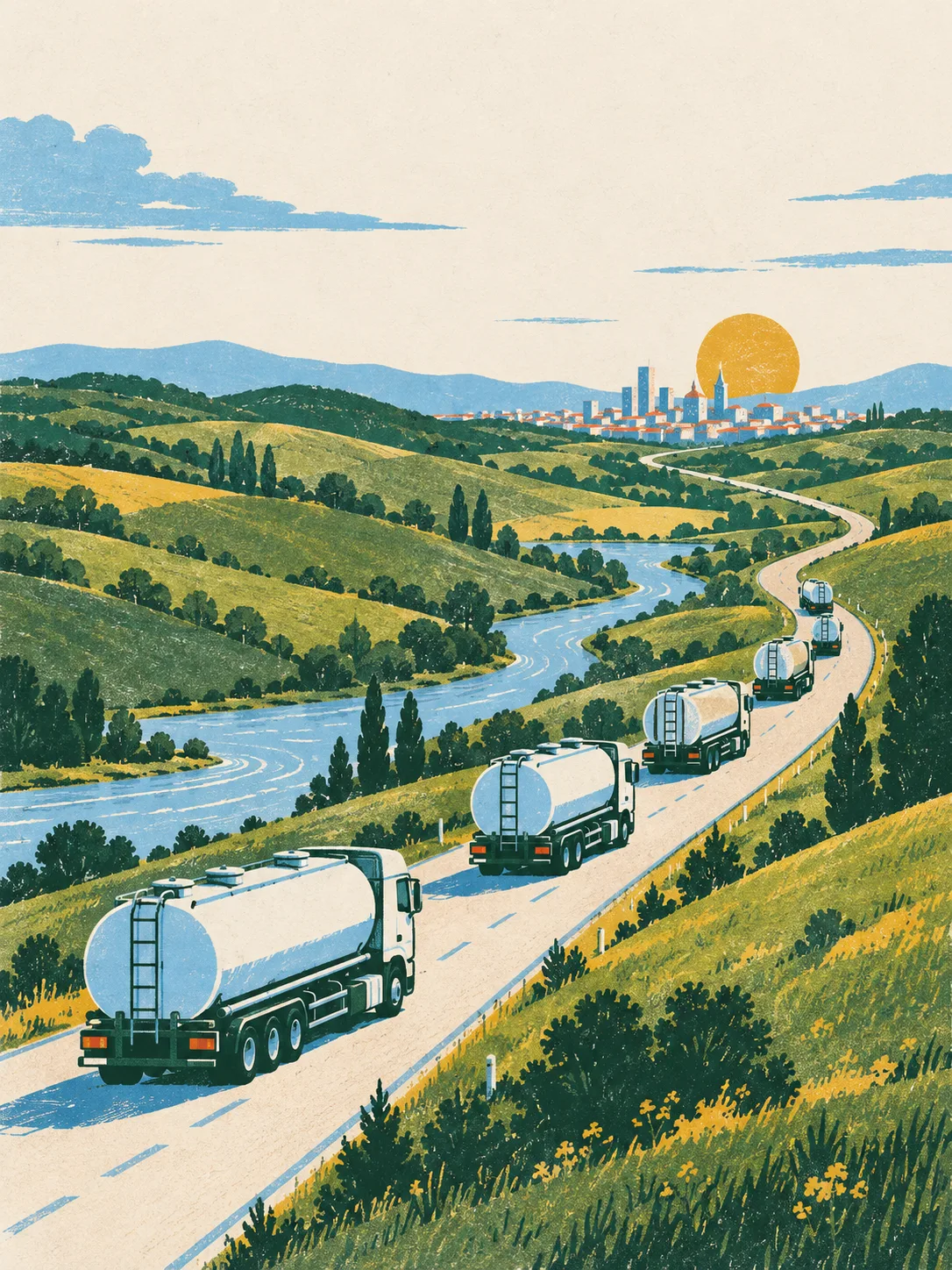
From the biology of the animal to the product in the consumer’s hands, dairy is one interconnected global value chain.
The dairy industry brings together animal production, agriculture, food manufacturing, engineering, logistics, science, finance, technology and commerce. Milk begins as a biological product at the farm, is transformed and protected through processing, and reaches consumers through increasingly sophisticated distribution and market systems. GEO Dairy defines this complete chain through three primary stages.
The dairy industry includes the complete economic and technical system required to produce milk, transform it into safe and marketable products, and deliver those products to customers and consumers. Around that core chain sits a much larger enabling system.
The enabling system around the chain: Engineering, Veterinary medicine, Genetics, Equipment, Ingredients, Finance, Workforce, Laboratories, Digital technology, Logistics, Regulation, Education, Research.
Dairy is simultaneously an agricultural industry, a biological production system, a food-manufacturing industry, a consumer-goods business.
Humans have raised milk-producing animals for thousands of years. Because fresh milk is highly perishable, early societies learned to preserve it, creating many of the dairy traditions that remain culturally important today.
Cattle, sheep and goats give communities recurring nutrition without slaughter.
Fermenting, cheese making, butter making and drying let milk nutrients be stored and carried.
Selective breeding and dedicated milk animals.
Mechanization, pasteurization and refrigeration.
Specialized genetics, nutrition, milking and herd management.
Robotics, sensors, traceability and genomics.
IoT, AI, digital supply chains and precision management.
Milk is produced every day, contains substantial water and nutrients, supports microbial growth, and deteriorates rapidly if it is not handled properly. As populations urbanized and food markets expanded, dairy moved from local household production toward specialized farms, processors and distribution systems.

Left as it is
Inside a dairy system
FAO, Agricultural production statistics 2010–2024 (FAOSTAT analytical brief)Verified 6 October 2026
FAO Dairy Production and Products gateway: Milk productionVerified 6 October 2026
01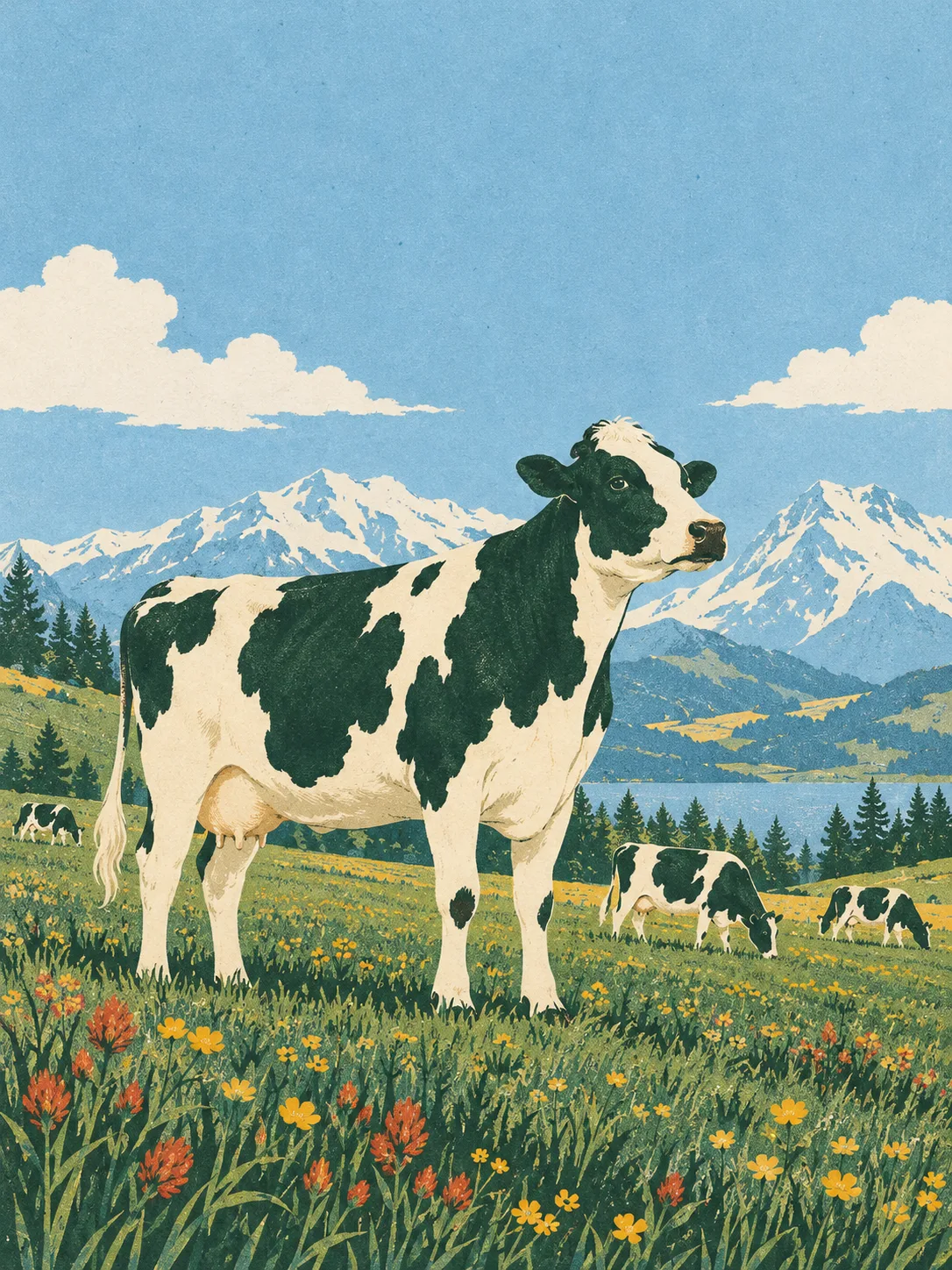 0281% cattle milk
 03
Global milk production grew from about 524 million tonnes in 1992 to 930 million in 2022, and FAO’s latest release places 2024 output at 985 million tonnes. The long-term story, however, differs by region.


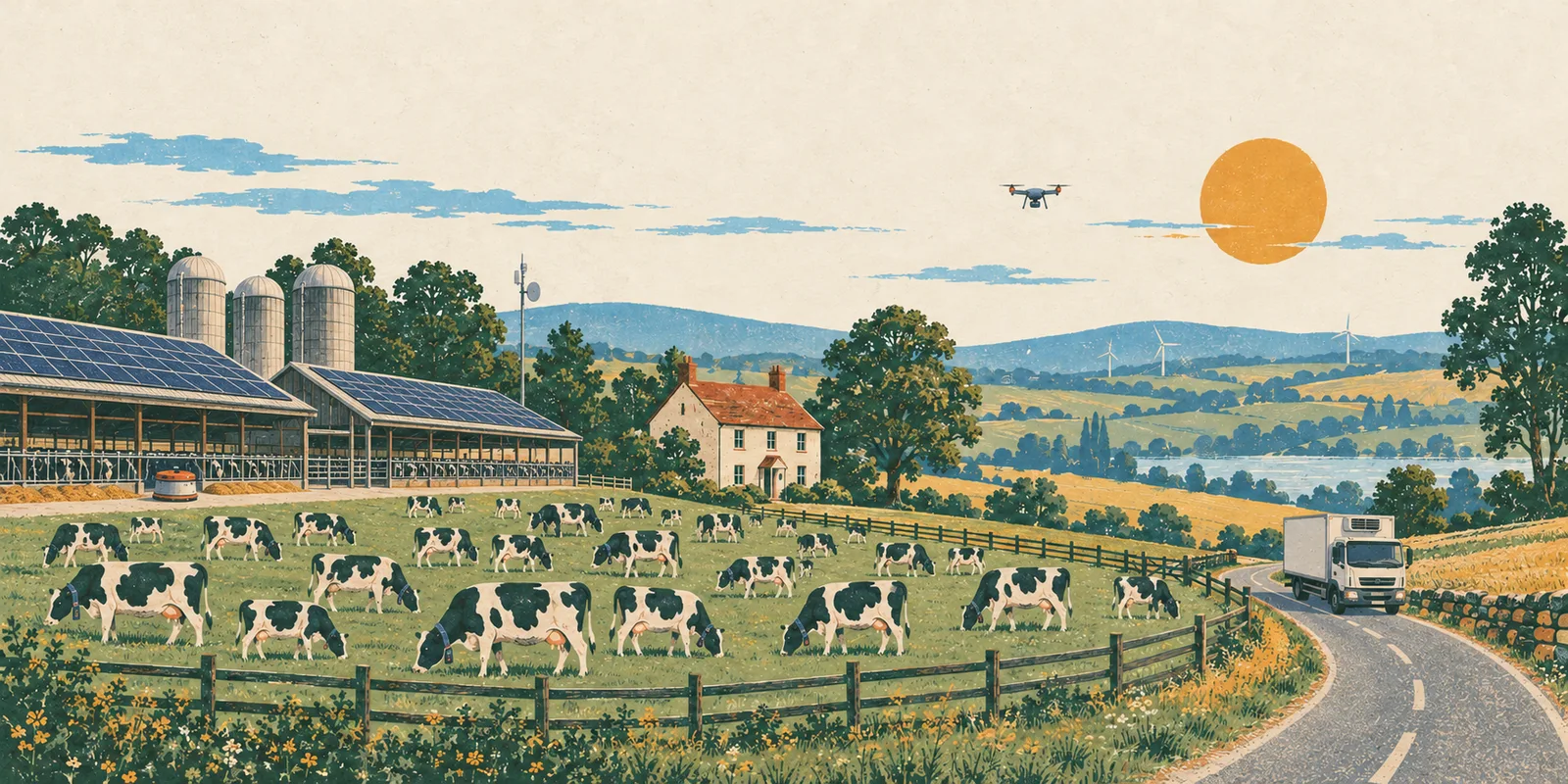
In some markets, growth comes mainly from more animals.
World milk production, million tonnes. Three reference points, not an annual series. FAO
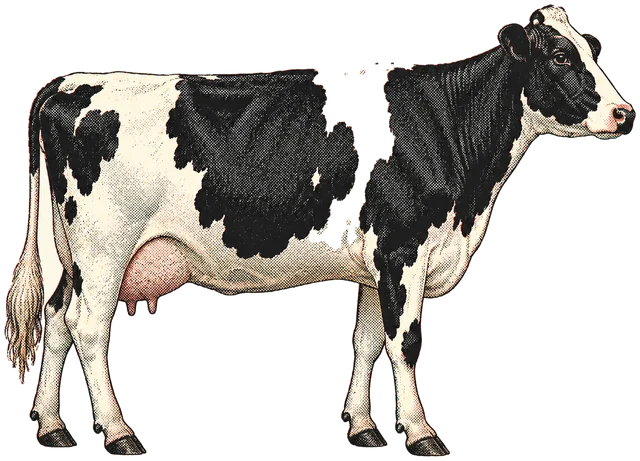
Cows dominate global commercial dairy, but milk also comes from buffaloes, goats, sheep, camels and other species. Their importance varies by geography, climate, food culture and production system.
For GEO Dairy’s Georgian commercial-development model, specialized dairy cattle form the principal production basis.

19%All other species
81%Cattle
FAO emphasizes milk’s importance for livelihoods, food security and household income, especially among small-scale producers.
Milk and dairy products provide energy, protein and a range of nutrients in many diets.
GEO Dairy uses these three stages as strict value-chain boundaries. Each performs a fundamentally different economic function, while information, quality requirements and commercial signals flow continuously between them.
Terminology varies across industries. These definitions stay the same everywhere on the GEO Dairy website.
Upstream
Midstream
Downstream
Upstream creates raw milk. Midstream creates finished dairy products. Downstream connects finished dairy products with markets.
Upstream covers the biological, physical and technical systems required to maintain dairy animals and produce high-quality raw milk.
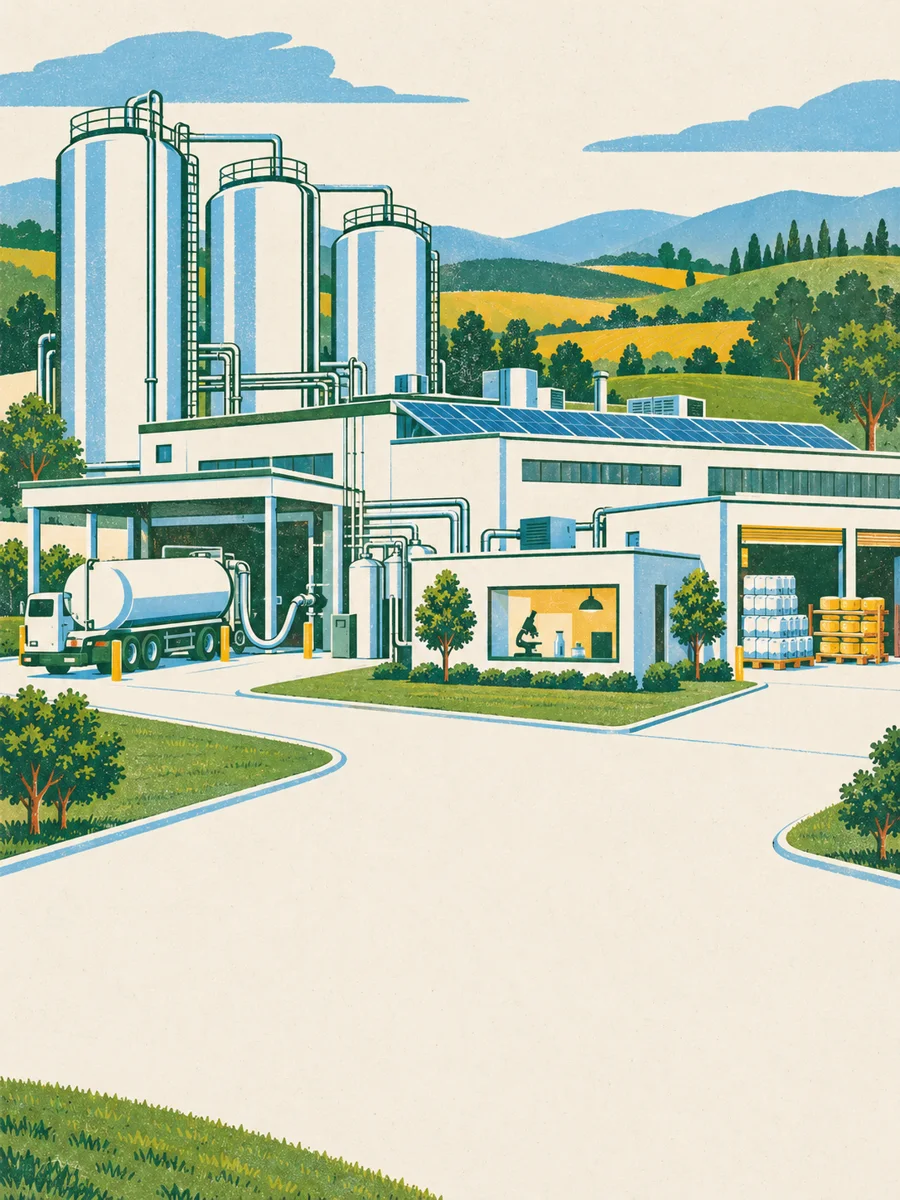
Midstream begins when raw milk enters the processing system. It covers the facilities, processes and control systems that transform milk into safe, consistent and commercially usable dairy products.
Explore Midstream Dairy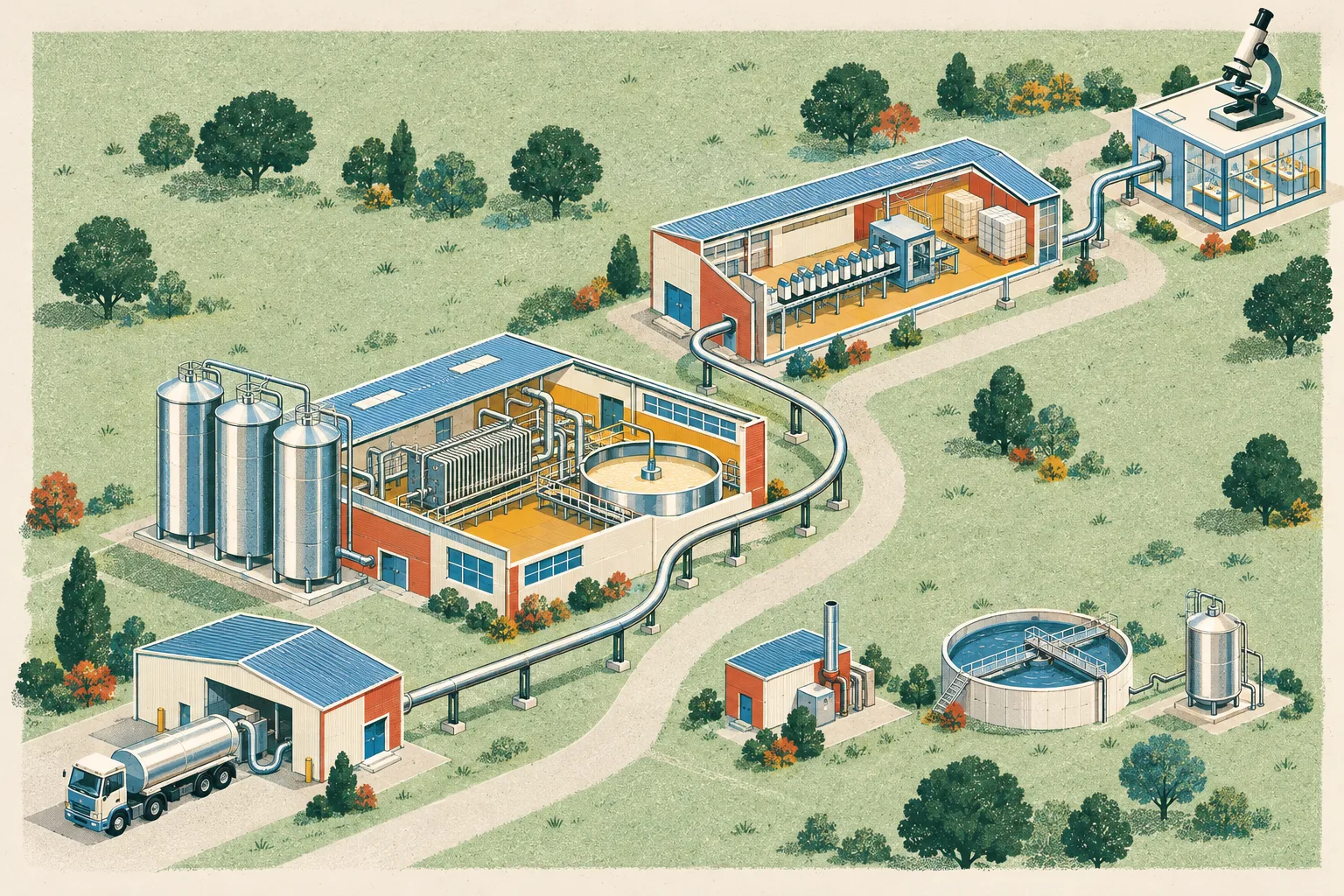
Downstream begins with the finished dairy product. Its role is to make that product available to customers in the correct place, condition, quantity and commercial format.
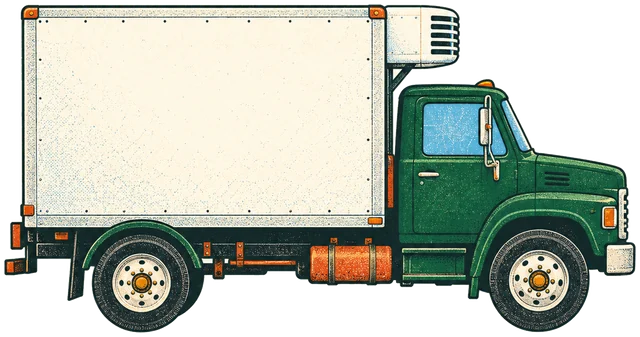
Illustrative routes from one cold store to four channels.
Milk physically moves from farm to processor to market, but information moves in both directions. A competitive dairy industry lets market requirements influence production decisions throughout the chain.
FarmMarketProducts move downstream
FarmMarketMarket information must move upstream
Codex defines a milk product broadly as a product obtained by processing milk, which may include functionally necessary additives and ingredients.
Pasteurized, UHT and other drinking milks.
The value of raw milk depends on more than volume. Composition, hygiene, temperature, somatic-cell level, bacterial quality, residues and processing suitability decide what can be made, and at what yield.
For a cheese-oriented system, milk solids and protein can matter as much as litres produced.
Fresh milk and many dairy products are highly perishable. Cooling begins immediately after milking and may stay essential through processing, storage, transport, retail and delivery. Choose a point to break the chain.
An unbroken cold chain carries the value of every earlier stage to the consumer.
Food safety and dairy quality begin before milk reaches a factory. That makes dairy quality a chain responsibility, not simply a laboratory function.
Point at a link: if it fails, the chain fails, however good the final test.
Six groups surround the three core stages and make them work. Each is a constellation of its own members.
National Dairy EcosystemUpstreamMidstreamDownstream
Dairy systems range from smallholder mixed farming to large specialized intensive farms. What matters is whether the model fits its conditions. Set the conditions and watch the fit change.
An illustration of the idea, not a recommendation for any farm.
Dairy has both economies and diseconomies of scale. Some activities gain from centralization; daily animal care and entrepreneurial oversight may gain from smaller accountable units.
A qualitative placement, not a measurement.
Not “What is the biggest possible scale?” but “At what scale should each dairy function be performed?”
≈150million households
= 1 million households
≈150 million households take part in milk production worldwide, and smallholders remain particularly important in developing economies.
The challenge: how smaller and family-owned businesses gain access to the capabilities, technology and markets available to larger organizations.
FAO Dairy Production and Products gateway: Milk productionVerified 6 October 2026
Ownership stays with each family; specialist capability is shared across the network.
Growth can come from more animals or from more milk per animal, with very different implications for land, feed, emissions, labour and economics. FAO notes that productivity in developing countries is often limited by feed quality, disease, limited access to services and lower genetic potential.
Modern dairying works on all seven together, not on animal numbers alone.
Illustrative directions, not measurements.
Profitability has to be evaluated across the correct business boundary. A technically efficient farm does not automatically create a profitable processing plant, and a good product does not automatically create an efficient distribution business.
Revenue
Costs
Adds to revenue
Adds to cost
Adds to revenue
Adds to cost
Fresh raw milk is expensive and difficult to move long distances, so international dairy trade is dominated by processed products with better value density, shelf life or transport characteristics. FAO’s annual Dairy Market Review tracks this cross-border trade.
A dairy business can compete through any of these. Choose a combination: there is no single correct dairy business model.
Pick a few strategies.
Because milk is biologically rich and perishable, dairy production and processing face extensive animal-health, food-safety, hygiene and traceability controls in developed regulatory systems.
Rules differ by country. Service pages reference current, jurisdiction-specific rules; this overview does not reproduce them.
Dairy uses biological resources, feed crops, land, water and energy while producing food, income, manure, emissions and economic activity. Judging it needs the complete system, not one indicator.
The value chain holds substantial opportunities for circular resource use, provided biological safety, economics and technical suitability are respected. They matter more as farming and processing intensify.
The change is not only mechanization. Modern dairy increasingly converts biological and commercial events into usable data.
Sensors can monitor animals, milk, equipment, processing, refrigeration and logistics. The value comes when those signals become timely decisions.
Better decisions, not technology for its own sake.
Automation changes rather than eliminates the human side of dairy. A major challenge is making dairy work more productive, safer, cleaner and more attractive to skilled people, globally and especially in rural economies.
Produce efficiently while maintaining animal health.
OpenSecure consistent nutrition in changing climates and markets.
OpenPrevent disease and improve longevity.
OpenAttract and retain capable people.
OpenMaintain consumer trust.
OpenImprove water, energy and emissions performance.
OpenManage biological production against changing markets.
OpenConnect farms, processors and markets more effectively.
Open01 / 09
 Precision dairy
More data per animal and process.
 Automation
Less repetitive manual work.
 Genetic acceleration
Faster selection using genomic information.
 Quality-based procurement
Paying increasingly for composition and measurable milk quality.
 Integrated supply chains
Closer coordination between farms, processors and markets.
 Traceability
Greater visibility across the chain.
 Resource efficiency
Lower losses of feed, water, energy and product.
 Product differentiation
Specialty, origin and value-added dairy matter more.
 Network models
Shared professional capabilities across independent businesses.
The taxonomy classifies which part of the dairy system an activity belongs to. Columns that run through all three stages are the shared vocabulary; the rest belong to one stage alone.
Point at a dot to read its address.
The technical taxonomy asks which part of dairy you are working on. The business direction asks what relationship you need: Service, Supply, Trade, Production or Ecosystem.
Domain
Direction
Upstream→Nutrition→Service
The directions describe GEO Dairy’s relationship with the industry; Upstream, Midstream and Downstream describe where in the industry that relationship occurs.
 Ecosystem
Knowledge, institutions, networks and industry development.
Explore Ecosystem 01Ecosystem Service
Professional capability.
Explore Service 02Service Supply
Resources and productive capacity.
Explore Supply 03Supply Trade
Finished dairy-product commerce.
Explore Trade 04Trade Production
Direct participation in producing dairy value.
Explore Production 05ProductionUnderstand the complete dairy value chain.
You are hereExplore dairy farming and raw-milk production.
Explore UpstreamExplore dairy processing and manufacturing.
Explore MidstreamExplore distribution, markets and fulfilment.
Explore DownstreamGlobal dairy data change continuously. GEO Dairy separates educational content, which changes slowly, from statistical indicators refreshed from authoritative sources. Every indicator carries:
Dairy begins with biology, but its success depends on much more: crops, animals, people, engineering, manufacturing, quality, cold chain, finance, technology and markets must work together.
Understanding where each activity belongs, and how it connects to the next, is the foundation for building stronger dairy businesses and stronger dairy systems.

 Cold store