
Upstream Dairy Industry
Where dairy begins: animals, feed, farming systems and the production of safe, high-quality raw milk.
Upstream is the biological and agricultural foundation of the dairy value chain. It brings together facilities, utilities, herd management, genetics, animal health, nutrition, milking and environmental systems to convert feed, water, land, labor and biological potential into raw milk.
GEO Dairy defines Upstream through eight technical domains plus an Integrated domain connecting the complete farm system.


The Raw-Milk Production Stage
Upstream covers the complete system required to establish, maintain and operate dairy animals for the production of raw milk.
- Environmental management
- Farm facilities
- Utilities
- Animals
- Genetics
- Health
- Nutrition
- Milking
The principal output is raw milk produced under controlled biological, hygienic and operational conditions.
- Calves
- Replacement animals
- Manure and nutrients
- Animal records
- Milk-quality data
- Biological and genetic information

Before the First Litre of Milk
Upstream does not begin at the milking machine. Milk production depends on infrastructure, animals, genetics, feed, water, health and management long before milk is harvested.
This is why GEO Dairy treats the dairy farm as a complete production system rather than merely a barn containing cows.
- Site & Facilities
- Water, Energy & Utilities
- Herd & Genetics
- Nutrition & Health
- Reproduction & Calving
- Lactation
- Milking & Cooling
- Raw Milk Ready for Transfer
Site chosen. Layout, permits and design begin.
Illustrative timeline for a new farm with home-reared heifers. Heifers commonly calve first at about 24 months.

The Boundary Between Farm and Processing
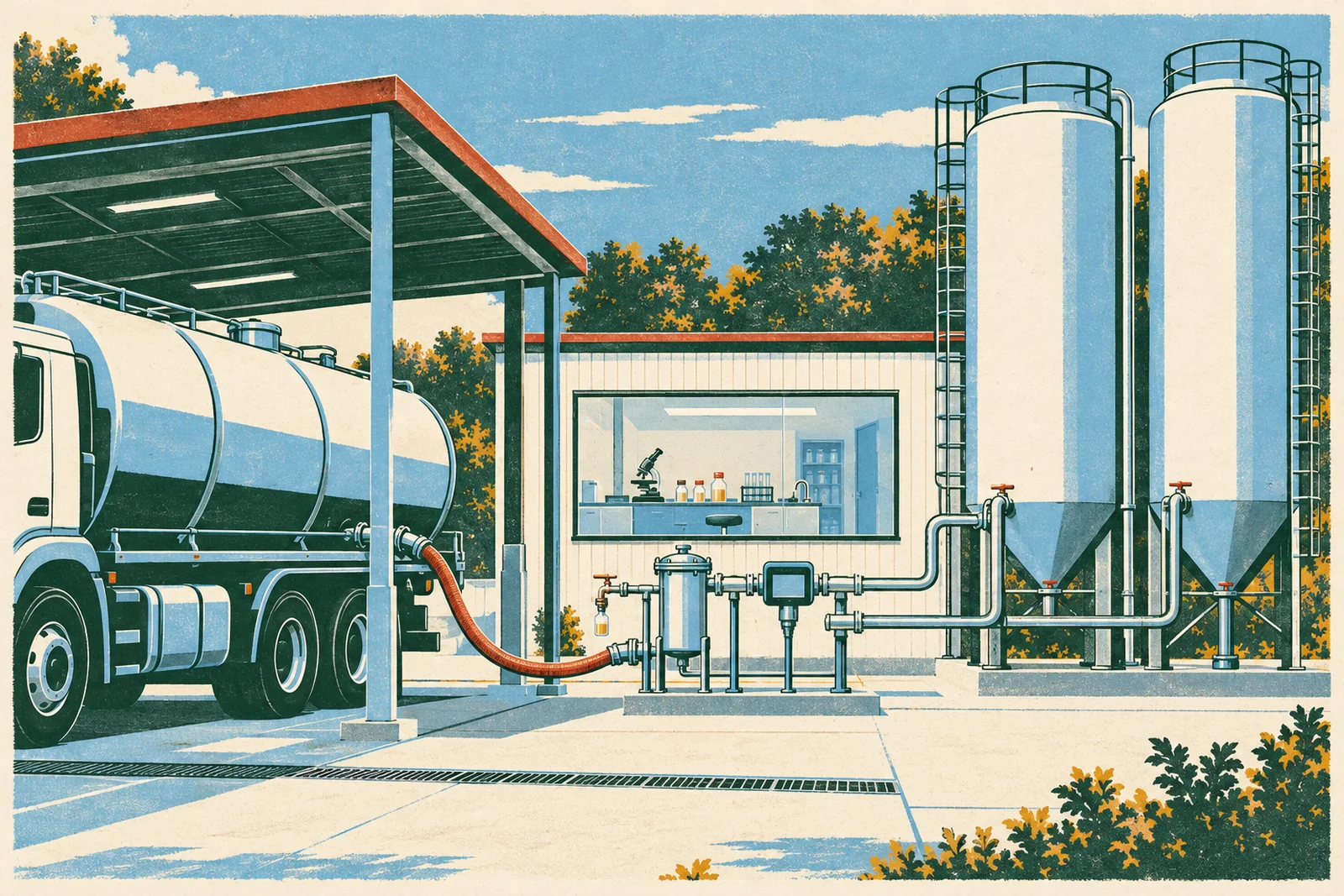
For GEO Dairy, Upstream ends with raw milk produced, handled, cooled, stored, checked and made ready for dispatch at farm level. The transition occurs when the raw milk enters the external collection and reception system leading to processing.
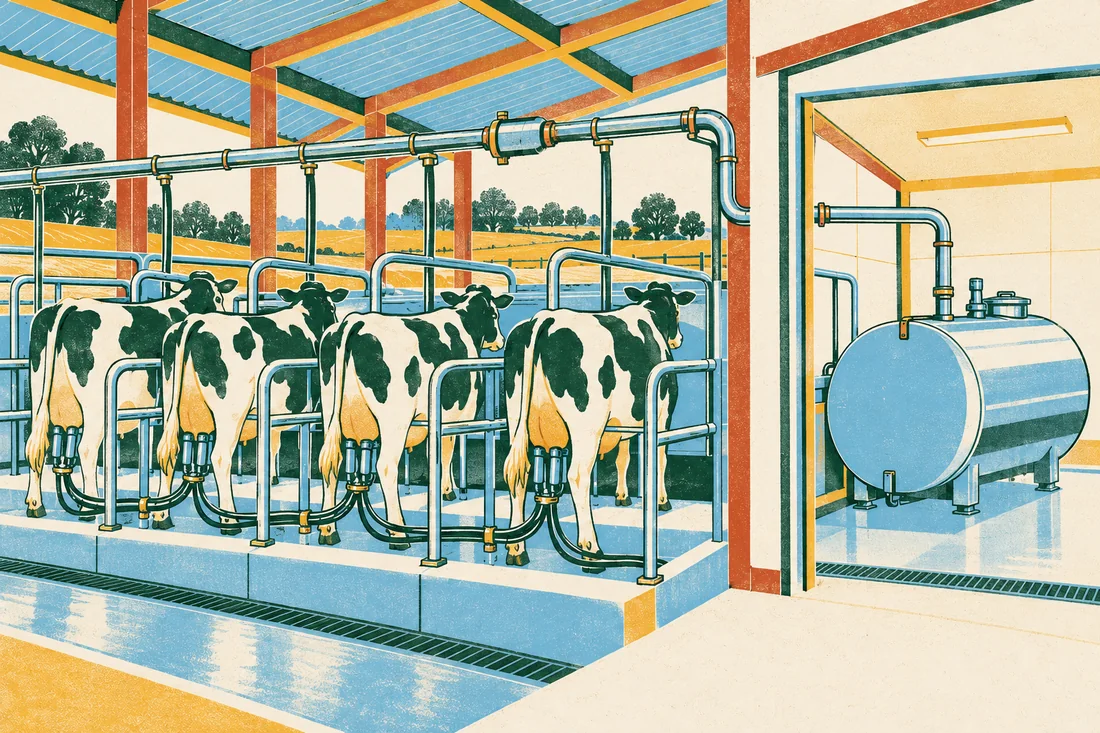
Upstream includes
- 01Milking
- 02On-farm milk handling
- 03Filtration where applicable
- 04Cooling
- 05Farm milk tanks
- 06Farm-side sampling and testing
- 07Storage before dispatch
Midstream begins
- 01Raw-milk collection and reception
- 02Intake control
- 03Reception testing
- 04Processor-side raw-milk storage
- 05Subsequent transformation
Upstream produces raw milk. Midstream receives and transforms it. This boundary is used consistently throughout GEO Dairy.
Production Depends on Living Systems
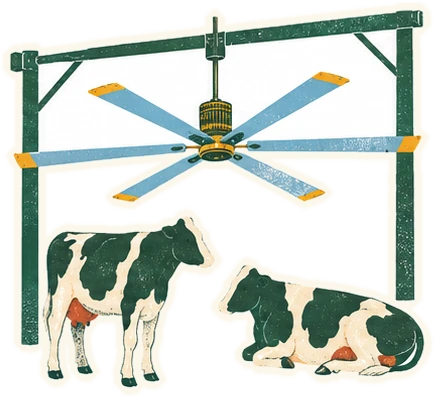
Unlike a conventional factory, a dairy farm works with living animals whose performance changes continuously with age, lactation stage, reproduction, nutrition, health, environment and management.
A cow cannot simply be switched on and off according to market demand.
That makes dairy farming both a biological system and a business system.
Factory line
Running at full output.
Dairy cow
Lactating, pregnant and growing at once.

Milk Production Is Part of a Reproductive Cycle
A sustainable dairy farm therefore manages more than today’s milking cows. It must continuously manage the next lactation, the next generation and the replacement structure of the herd.
This explains why Herd, Breeding and Health are separate Upstream domains.
- Calf
- Growing Heifer
- Breeding
- Pregnancy
- First Calving
- Lactation
- Rebreeding
- Dry Period
- Next Calving


Milk Is the Result of Many Systems Working Together
Genetic potential×Nutrition×Health×Reproduction×Comfort×Management=Realized Production
High genetic potential cannot compensate permanently for poor nutrition. Excellent feed cannot overcome severe heat stress. A good barn cannot compensate for reproductive failure. Upstream performance is therefore limited by the weakest critical part of the system.
Optimize the farm as a system, not one component at a time.


What the Upstream System Consumes
A dairy farm draws in six kinds of input: biological, nutritional, physical, human, financial and information. Point at a cell to open it.
This shows why Supply and Service interact with every technical domain.

More Than Raw Milk
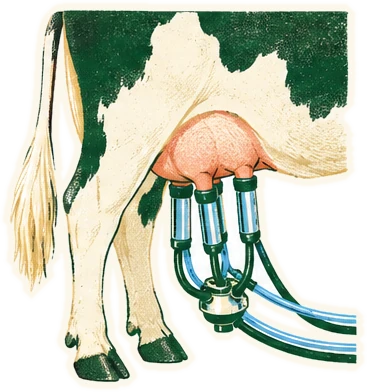
A dairy farm creates several flows. Modern dairy management increasingly treats information as a production output, because data allows biological performance to be measured, compared and improved.
- Raw milkPrimary output
- Cooled, recorded and ready for collection
- The product the whole farm system is built to deliver
 AnimalsBiological outputs
- Calves
- Replacement heifers
- Culled animals
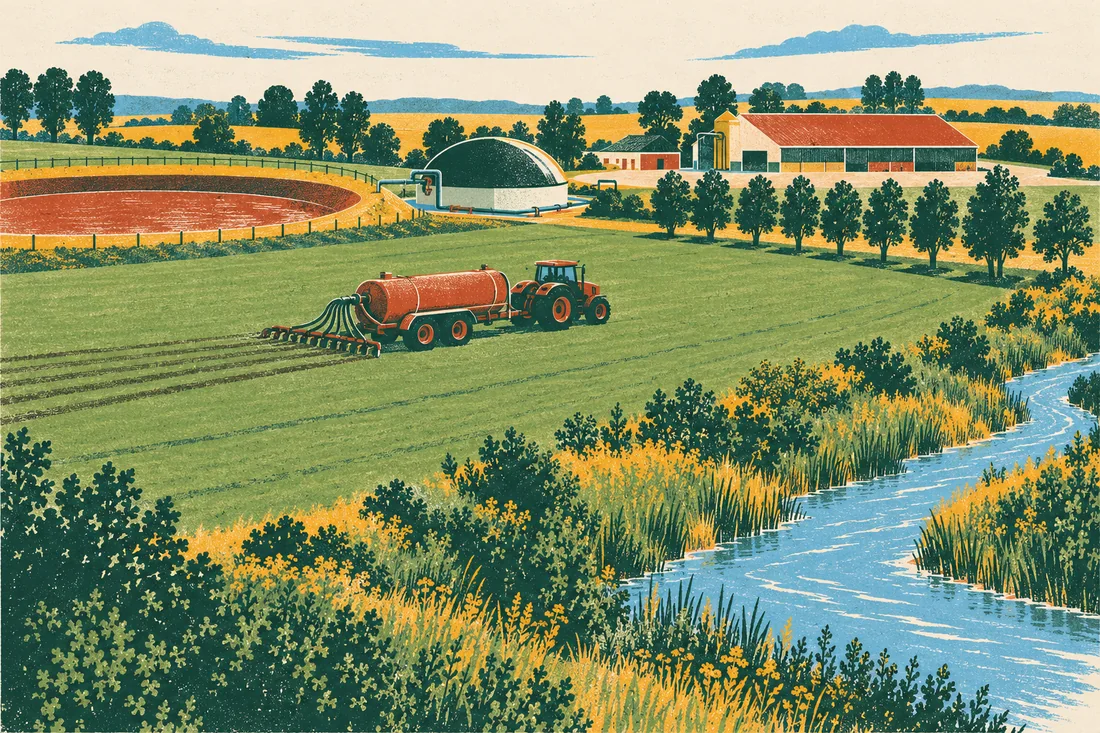 NutrientsNutrient outputs
- Manure
- Urine
- Organic matter
 DataInformation outputs
- Milk production
- Fertility
- Animal-health history
- Feed performance
- Milk quality
- Genetic data
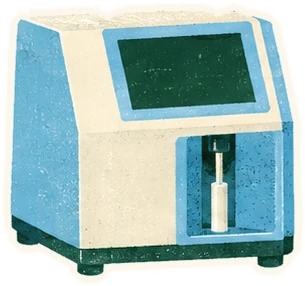
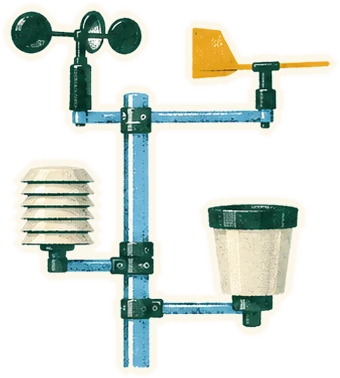
Nine Technical Domains
GEO Dairy organizes Upstream into eight technical domains and one Integrated domain. This taxonomy remains identical throughout the website, portfolio, Navigator and CMS.

Where and in what physical environment does production occur?
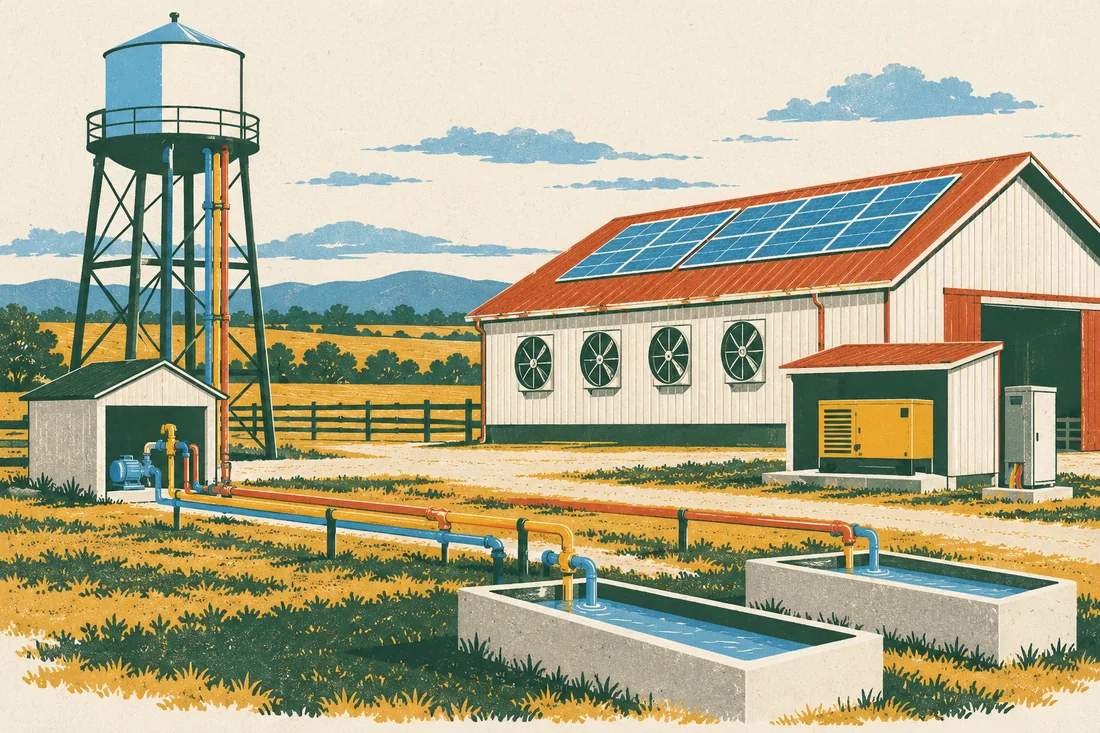
What supporting technical systems keep the farm functioning?
What animals comprise the productive population and how are they managed?
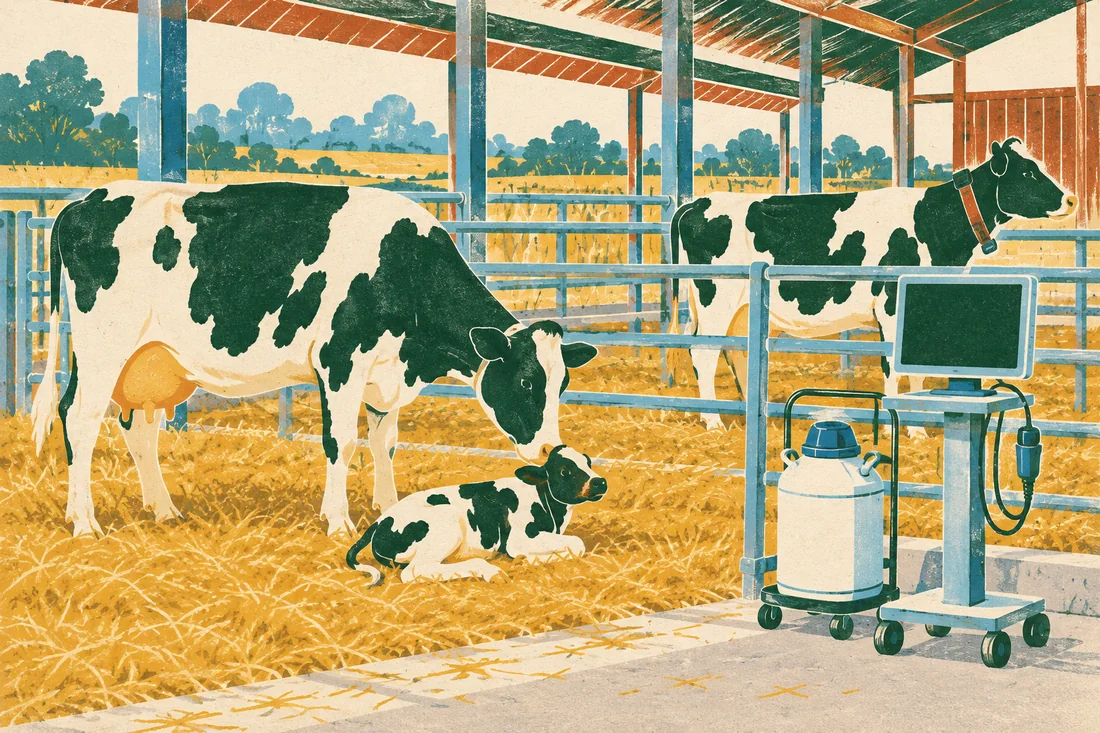
How is the future genetic and reproductive population created?
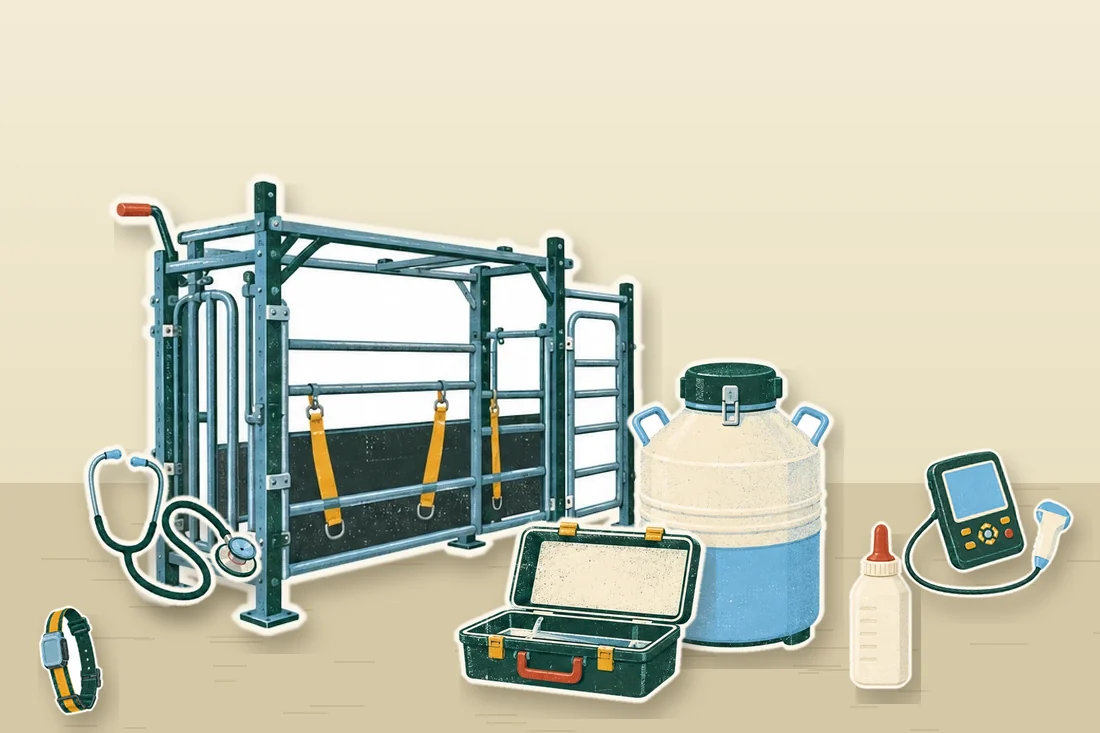
How are animals kept healthy and disease controlled?

How are animals supplied with the nutrients required for performance?
How is milk harvested, handled, cooled and controlled at farm level?
How are manure, wastewater, emissions and farm environmental impacts managed?
How are several or all Upstream domains designed and managed together?
U01 Facilities
Facilities covers the physical spaces, buildings, structures and layouts in which dairy production takes place.
Barns · cow housing · dry-cow, calving and calf areas · handling and waiting areas · milking buildings · farm roads · storage · offices and support rooms · biosecurity zoning · site layout
A dairy facility is not simply shelter. It controls cow movement, labor movement, hygiene, ventilation, safety, biosecurity and the interaction between every other farm system.


- DrinkersCows drink 80–150 litres a day. No water, no feed intake, no milk.
- Milk coolingWarm milk loses quality within hours; the tank must keep running.
- Ventilation & coolingFans and sprinklers stop: heat stress rises and intake falls.
- Hot water & cleaningNo hot water, no clean milking system: bacteria counts climb.
- Milking vacuum & pumpsCows cannot wait: missed milkings hurt udders and yield.
- Comms & monitoringAlarms, sensors and records go dark when they are needed most.
U02 Utilities
Utilities provides the energy, water, thermal, ventilation, pumping, communication and other enabling systems required for farm operation.
Electricity · solar PV · backup power · water abstraction, storage and treatment · pumping · hot water · ventilation · cooling · compressed air where required · drainage · communications · monitoring
A modern dairy farm cannot operate reliably without utilities. Water interruptions, inadequate power, poor ventilation or failed cooling can immediately become animal-health and milk-quality problems.
Utilities are production infrastructure, not background infrastructure.
U03 Herd
Herd covers the structure, composition, lifecycle, identification, grouping and management of the dairy-animal population.
Herd size · age structure · lactating and dry cows · transition animals · heifers · calves · replacement rates · grouping · identification · movement · culling · records
A dairy herd must remain balanced over time. Too few replacements threaten future capacity; too many replacements consume feed, space and capital.
What animals should the business have, in what numbers and at what stages of life?
- Lactating cows
- Dry cows
- Youngstock
Illustrative 100-cow herd, first calving at 24 months, 10% rearing losses.


U04 Breeding
Breeding covers reproduction and genetic improvement of the dairy population.
Breeding determines both whether the next calf is created and what genetic potential that calf will carry into the future herd. It combines reproductive efficiency and genetic progress, but remains separate from general herd management.
- Artificial insemination
- Breed selection
- Heat detection
- Genetic objectives
- Synchronization
- Semen selection
- Pregnancy diagnosis
- Genomic selection
- Fertility
- Mating plans
- Sex-sorted semen
- Replacement genetics

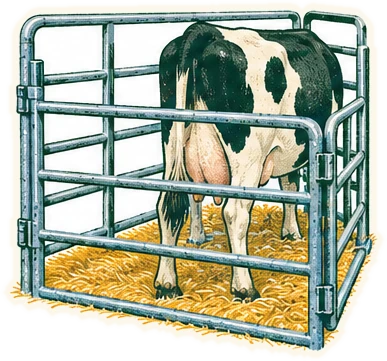
U05 Health
Health covers preventive, diagnostic and therapeutic systems required to maintain animal health, welfare and biosecurity.
The most efficient health system prevents avoidable disease rather than relying primarily on treatment after production has already been lost.
- Clinical mastitis
- Lame cows
- Sick calves
- Subclinical mastitis
- Hoof lesions
- Ketosis & metabolic disease
- Transition losses
- Poor fertility
- Lost milk & early culling
- Herd-health planning
- Vaccination
- Calf & transition care
- Medicine management
- Quarantine
- Disease surveillance
- Biosecurity
Illustrative rations, share of dry matter. Real rations are formulated from feed tests.
U06 Nutrition
Nutrition covers the production, sourcing, formulation, storage, preparation and delivery of feed required by dairy animals.
Forage · pasture where relevant · silage · grains · concentrates · minerals · feed additives · ration formulation · dry matter · feed testing · TMR · storage · delivery · feed efficiency
Nutrition connects crop agriculture with animal biology. Feed must not merely fill the animal; it must provide the correct nutrients in the correct form, quantity and consistency for the animal’s production stage.
Feed quality becomes milk performance only through correct ration design and intake.
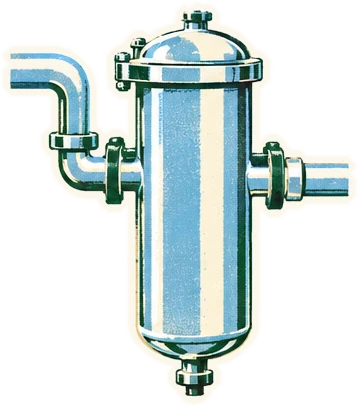
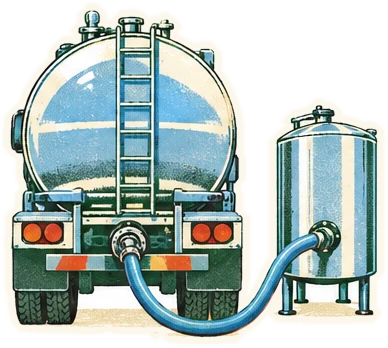
U07 Milk
Milk covers the harvesting, measurement, handling, cooling, hygiene and farm-level control of raw milk.
The Milk domain begins at the interface between the cow and the milking system and ends when farm milk is ready for dispatch into the Midstream collection and reception chain. This is where the Upstream output becomes a controlled commercial product.
- Udder preparationThe cow–machine interface: clean, stimulated teats.
- Milking unit & vacuumGentle, stable vacuum harvests milk without harming teats.
- Milk meterEvery cow’s yield recorded at every milking.
- Milk line & filterClosed lines carry milk; the filter removes particles.
- Pre-coolerPlate cooler uses well water to take the first heat out.
- Bulk milk tankHeld at about 4 °C until collection.
- Sampling & farm testSamples taken, temperature and quality checked.
- Ready for dispatchControlled raw milk handed to the Midstream chain.
U08 Environment
Environment covers the environmental flows and impacts created by dairy farming and the systems used to manage them responsibly.
A dairy farm imports nutrients through feed and exports nutrients through milk, animals and manure. Environmental management therefore begins with understanding nutrient and material flows, not only disposing of waste.
Manure is both an environmental responsibility and a potential agricultural resource.
- AirEmissions · Odor · Environmental monitoring
- FarmyardManure · Slurry · Bedding waste · Solid/liquid separation · Composting · Biogas
- WaterWastewater · Runoff · Water reuse
- SoilNutrient management · Manure as fertilizer · Crop uptake


UX Integrated
Integrated applies when the requirement crosses several technical domains and cannot responsibly be solved within one domain alone.
Integrated is not a miscellaneous category. It is the composition layer used when several domains must be coordinated into one functioning dairy system.
- Complete new dairy farm
- Farm modernization
- Dairy Grid Family Farm
- Whole-farm efficiency
- Expansion planning
- Integrated automation
- Complete sustainability improvement
- Farm turnaround

Specialization Without Fragmentation
Each Upstream domain requires specialized expertise. A veterinarian, nutritionist, structural engineer and milking specialist do not perform the same professional function. However, their decisions interact.
- Nutrition changes manure volume.
- Facilities affects hoof health.
- Utilities affects cooling.
- Breeding influences future milk solids.
- Health influences fertility.
- Milking influences udder health.
Separate technical responsibility. Integrate system decisions.
Most Farm Systems Ultimately Meet at the Animal
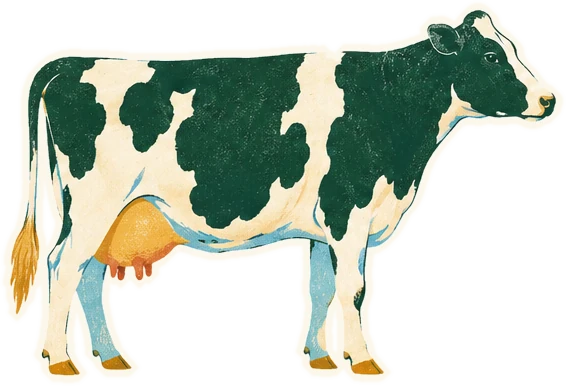
The animal experiences these systems simultaneously. The cow does not experience a “Nutrition department” separately from a hot barn, insufficient water or poor hoof condition.
This is the reason for integrated design.
Point at a systemto see it from her side.
- Facilities
- Water & Utilities
- Nutrition
- Health
- Breeding
- Herd Management
- Milking
- Environment
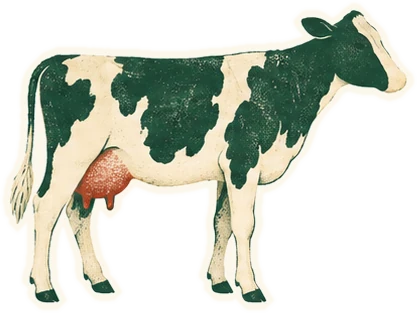
Different Animals Need Different Systems
Treating every animal identically is biologically inefficient. Facilities, nutrition, health and management should follow life stage and production status.
Colostrum, hygiene, health and early nutrition.
Development and rumen transition.
Growth toward breeding target.
Preparation for first calving.
High-risk transition period.
Milk production and reproduction.
Udder recovery and preparation for next lactation.
Nutrition, health and calving management.
Milk Production Changes Throughout the Cycle
Milk yield rises after calving, reaches peak production, then declines progressively as lactation advances. Feed intake, body condition, reproductive timing and health interact with this curve.
The farmer manages peak milk while protecting fertility · body condition · health · next lactation
This is one reason monthly average yield alone is not sufficient to evaluate dairy performance.
Day 50Milk 35.8 kgIntake 22.8 kg DMBody condition 2.85
Illustrative Holstein lactation (Wood’s curve). Point along the curve to read a day.
Every Lactation Depends on the Next Calving
A dairy business requires continuous reproductive performance. Long calving intervals, infertility, pregnancy loss or poor heifer development reduce biological and financial efficiency. The objective is not the maximum number of calves: it is the correct number of high-quality replacements for the herd strategy.
- Breeding–
- Pregnancy–
- Calving–
- Female Calf–
- Heifer Development–
- First Calving–
- Productive Cow–
Illustrative: 100 cows bred per year, 30% replacement rate.
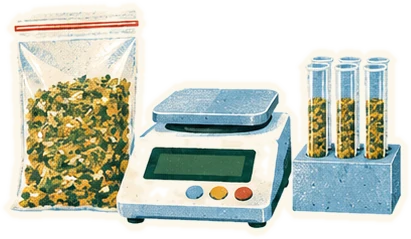
From Field to Feed Bunk
Feed should be managed as a controlled production process. Losses can occur at crop production, harvest, fermentation, storage, mixing, delivery or animal intake.
This is why Nutrition extends beyond the formulation software.
- Crop / Supplier100%Yield and quality start in the field or with the supplier.
- Harvest−5%Field losses, wrong maturity or moisture at cutting.
- Storage−10%Fermentation and face losses: silage is a living process.
- Testing85%Dry matter and nutrients measured, not assumed.
- Ration Formulation85%A ration designed for each group from the test results.
- Mixing−2%Loading accuracy and mixing time change what cows receive.
- Delivery−2%Timing, push-ups and bunk space decide what is available.
- Intake−3%Refusals and sorting: what cows actually eat.
- Milk ResponsemilkOnly what is eaten and digested becomes milk.
Illustrative dry-matter losses. Well-managed farms keep each step small; poorly managed ones lose much more.

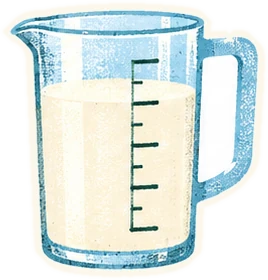
The Most Fundamental Feed Ingredient
Water influences intake, milk production, cooling, hygiene and animal health. A dairy farm must therefore consider both water quantity and water quality.
- Drinking
- Milking
- Washing
- Cooling
- Cleaning
- Staff use
- Technical systems
Water planning belongs primarily to U02 Utilities, but directly affects U06 Nutrition U05 Health U07 Milk U08 Environment. A clear example of cross-domain integration.
Drinking water from Murphy, Davis & McCoy (1983, Journal of Dairy Science), with intake estimated from yield. Illustrative.
Units carried from cow to cow; milk collected in cans.
Units move along a pipeline above tie stalls; milk flows to the tank.
Cows come to a pit parlour; milkers work at udder height.
A turning platform brings each cow to the milker.
Cows choose when to be milked; the robot attaches.
Typical herd-size ranges; real choices overlap.
Harvest Milk Efficiently Without Damaging Cow or Product
The correct system depends on herd size, labor model, milking frequency, capital, expansion plan and management capability. The objective is not the most sophisticated equipment. It is the system that produces:
efficient cow flow+complete milk harvest+udder health+hygiene+reliable data+manageable labor

Protect Quality Immediately After Milking
Raw milk begins changing from the moment it leaves the udder. Rapid cooling and hygienic storage help preserve quality before collection or processing.
- Milking
- Filtration / transfer
- Cooling
- Storage
- Sampling
- Dispatch
- Peak milk volume
- Collection frequency
- Incoming milk temperature
- Target cooling time
- Ambient conditions
- Future expansion
EU rules (Regulation (EC) No 853/2004) require milk cooled immediately to 8 °C or less with daily collection, 6 °C otherwise. Growth figures are illustrative.
Prevent Problems From Entering or Moving Through the Herd
Disease prevention depends partly on controlling the movement of animals, people, vehicles, equipment and biological materials.
Biosecurity cuts across U01 Facilities U03 Herd U05 Health and therefore often requires Integrated planning.
Good Welfare and Good Production Usually Share the Same Foundations
Adequate feed and water, comfortable resting, suitable flooring, ventilation, appropriate handling, health care and freedom from avoidable stress support both ethical responsibility and productive performance.
Designed into housing · handling · nutrition · health · milking · transport interfaces, rather than treated only as an audit requirement.

Daily Consistency Determines Biological Performance
Dairy animals require care every day. Feeding, milking, observation, cleaning, reproduction and treatment cannot simply be postponed without consequence.
- Owner-operators
- Herd managers
- Milkers
- Feeders
- Calf staff
- Veterinarians
- AI technicians
- Nutritionists
- Equipment technicians
- Data & management support
Automation should reduce repetitive work while increasing consistency and technical capability.
- Milking
- Feeding
- Calf feeding
- Bed cleaning
- Breeding & AI
- Health checks & treatment
- Ration review
- Equipment check
- Records & planning
- Night check

Automate Repetition, Improve Consistency
Automation should solve a defined labor, consistency, welfare or performance problem. It should not be added merely because technology is available.
- 0Labor
- 0Consistency
- 0Welfare
- 0Performance
Illustrative hours. Each switch is labelled with the problem it is there to solve.
From Herd Average to Individual Animal Management
Precision dairy allows management to move from occasional observation of the herd toward continuous monitoring of individual animals and equipment.
Daily milkConductivityActivityRuminationFeed intakeBody conditionReproductionTreatmentsWeightTemperatureLocation
But more data is useful only when someone is responsible for turning it into action.
Simulated sensor data.
Index per litre, milk revenue = 100. Illustrative proportions.
Biology Must Become a Viable Business
Milk and animal revenue−Feed + replacement + labor + health + utilities + maintenance + finance + depreciation
Feed is usually one of the largest operating costs, while livestock, facilities and equipment represent major capital commitments. Small changes in milk yield, feed efficiency, fertility or replacement rate can therefore materially alter profitability.
Feed cost per litreLabor per litreMilk per cowMilk solids per cowReplacement costVeterinary cost per animalEnergy per litre
Litres Are Not the Only Output
Milk contains water, fat, protein, lactose and other solids. The economic importance of these components depends on the processor and final product. A cheese-focused chain may value protein · fat · total solids · processing characteristics more than litres alone.
The farm should increasingly produce the milk the processor actually needs.
- Water–
- Fat–
- Protein–
- Lactose–
- Minerals–
Cheese from 100 kg of milk10.2 kg
Typical breed averages; cheese yield by the Van Slyke formula. Illustrative.
One family, professional systems
The Right Size Depends on the System
Dairy farms range from households with a few animals to operations with thousands of cows. Scale affects labor specialization, equipment utilization, purchasing, management complexity and capital requirements.
- Milking equipment
- Purchasing
- Feed mixing
- Specialized management
- Management distance
- Labor complexity
- Disease concentration
- Capital intensity
- Manure concentration
A technically optimal dairy industry may use different scales for different functions rather than one scale everywhere.
Ownership and Scale Are Different Questions
A family-owned farm does not necessarily mean a traditional or low-technology farm. Modern facilities, automated equipment, professional genetics, prepared feed, veterinary services and digital systems can all operate within family ownership.
Small ownership can access large-system capability through networks.
What Enters the Cow Does Not Disappear
Only part of the nutrients consumed leave the farm as milk or animals. The remainder must be managed through manure, crops, storage, treatment or other systems.
This is why high-performance dairy farming and nutrient management must develop together.
Typical shares of intake for lactating cows; individual farms vary widely. Illustrative.
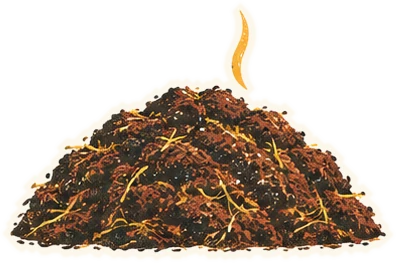
- Manure
- Storage
- Separation
- Solid fertilizer / compost
- Liquid fertilizer
- Crop application
- Feed crops
- Animals
Close the Nutrient Loop Where Practical
Manure moves through storage and separation into solid fertilizer or compost and liquid fertilizer, back onto fields, into feed crops and back to the animals.
The correct solution depends on:
- Herd size
- Manure type
- Land
- Crops
- Transport
- Regulation
- Climate
- Economics


Efficiency, Longevity and Resource Management
A strong Upstream sustainability strategy considers milk per animal, lifetime productivity, feed efficiency, fertility, animal health, mortality, water, energy, manure, nutrient balance, emissions and workforce conditions.
The objective should not be to maximize one sustainability metric at the expense of the whole system.
Illustrative profiles of three strategies.
A Farm Depends on Businesses Around It
Feed growers, veterinarians, breeding providers, equipment companies, engineers, laboratories, banks, insurers, transporters, processors and technology providers.
The strength of Upstream dairy depends partly on the quality and accessibility of the ecosystem surrounding individual farms.
Different Technical Needs Require Different Professional Actions
Within every Upstream technical domain, GEO Dairy may provide or coordinate five kinds of professional action. Upstream → Nutrition → Advisory is different from Upstream → Nutrition → Operations, even though both address the same technical domain.
- AdvisoryWhat should be done?
- EngineeringHow should it be technically designed?
- ImplementationHow should the approved solution be built or started?
- OperationsWho will perform or manage the recurring activity?
- DevelopmentHow can capability or performance be improved?
- U01 Facilities
- U02 Utilities
- U03 Herd
- U04 Breeding
- U05 Health
- U06 Nutrition
- U07 Milk
- U08 Environment
- UX Integrated
- Advisory
- Engineering
- Implementation
- Operations
- Development
Upstream→Nutrition→Advisory
Open AdvisoryWhat the Farm Needs to Obtain
The same Upstream domains interact with five supply directions. This helps show why taxonomy and business direction are different dimensions. Point at any cell.
| Infrastructure | Equipment | Inputs | Finance | Workforce | |
|---|---|---|---|---|---|
| U01 Facilities | |||||
| U02 Utilities | |||||
| U03 Herd | |||||
| U04 Breeding | |||||
| U05 Health | |||||
| U06 Nutrition | |||||
| U07 Milk | |||||
| U08 Environment | |||||
| UX Integrated |
Upstream→Milk→EquipmentMilking and cooling equipment

- Dairy farmers
- Farm investors
- Herd managers
- Calf & heifer businesses
- Feed producers
- Silage producers
- Breeding companies
- AI technicians
- Veterinarians
- Laboratories
- Engineers
- Builders
- Equipment manufacturers
- Distributors
- Finance providers
- Insurers
- Software & technology companies
Who Participates in Upstream Dairy?
Seventeen kinds of participant, from dairy farmers and herd managers to laboratories, insurers and software companies.
GEO Dairy can connect demand and capability through the same technical taxonomy.
The Farm Must Produce for the Next Stage
The farm should not optimize production independently of the processor. Midstream economics depend heavily on the quality and composition of the milk supplied by Upstream. A mature dairy industry creates feedback from processor to farm as well as movement of milk from farm to processor.
- Milk volume
- Milk temperature
- Fat
- Protein
- Microbiological quality
- Residues
- Traceability
- Delivery timing
- Payment for fat and protein
- Quality bonuses and penalties
- Laboratory results per collection
- Collection schedule
- The milk the plant needs
Point at a parameter to see why the processor cares.
Dairy Farming Is Connected to Crop Agriculture
Although GEO Dairy’s taxonomy focuses on the dairy value chain, Upstream relies heavily on external crop systems for maize, alfalfa, hay, grains, protein feeds and bedding.
Crop production does not need to sit inside every dairy farm. It may be a specialized business supplying several farms.
This is especially important for Dairy Grid, where forage and feed production is intentionally separated from the Family Farm operating boundary.
- Maize
- Alfalfa
- Hay
- Grains
- Protein feeds
- Bedding
Not Every Animal Remains in Dairy Production
Dairy systems also generate male calves, surplus heifers and culled cows. These animals can move into separate livestock and meat value chains. The herd should be designed with clear biological and commercial pathways for them. This is an interface, not a reason to classify meat production inside the dairy Upstream domain.
Distributed Ownership, Shared Capability
Dairy Grid applies GEO Dairy’s Upstream principles through independently owned Family Farm units supported by shared capabilities at higher network levels. At Family Farm level, the core role is professional raw-milk production.
Keep daily ownership close to the farm. Share capabilities that benefit from scale.
- Feed preparation
- Calf rearing
- Veterinary services
- Breeding support
- Specialist technical services
- Digital systems
- Family Farm
- Family Farm
- Family Farm
- Family Farm
- Family Farm
- Family Farm
- Family Farm
- Family Farm
- Family Farm
- Family Farm
Start With the Technical Need, or Let Navigator Guide You
Visitors who already know their area select a domain, then choose Service or Supply. Visitors who do not know the technical category can describe the problem, and GEO Dairy Navigator translates it into likely needs, rather than expecting them to diagnose the system alone.
My cows produce less milk in summer.
- Facilities
- Utilities
- Herd
- Breeding
- Health
- Nutrition
- Milk
- Environment
- Integrated
Explore the Upstream Domains
Eight domain cards plus Integrated. Open one to choose what you need: a professional service, or something to supply.
Good Milk Begins Long Before Milking
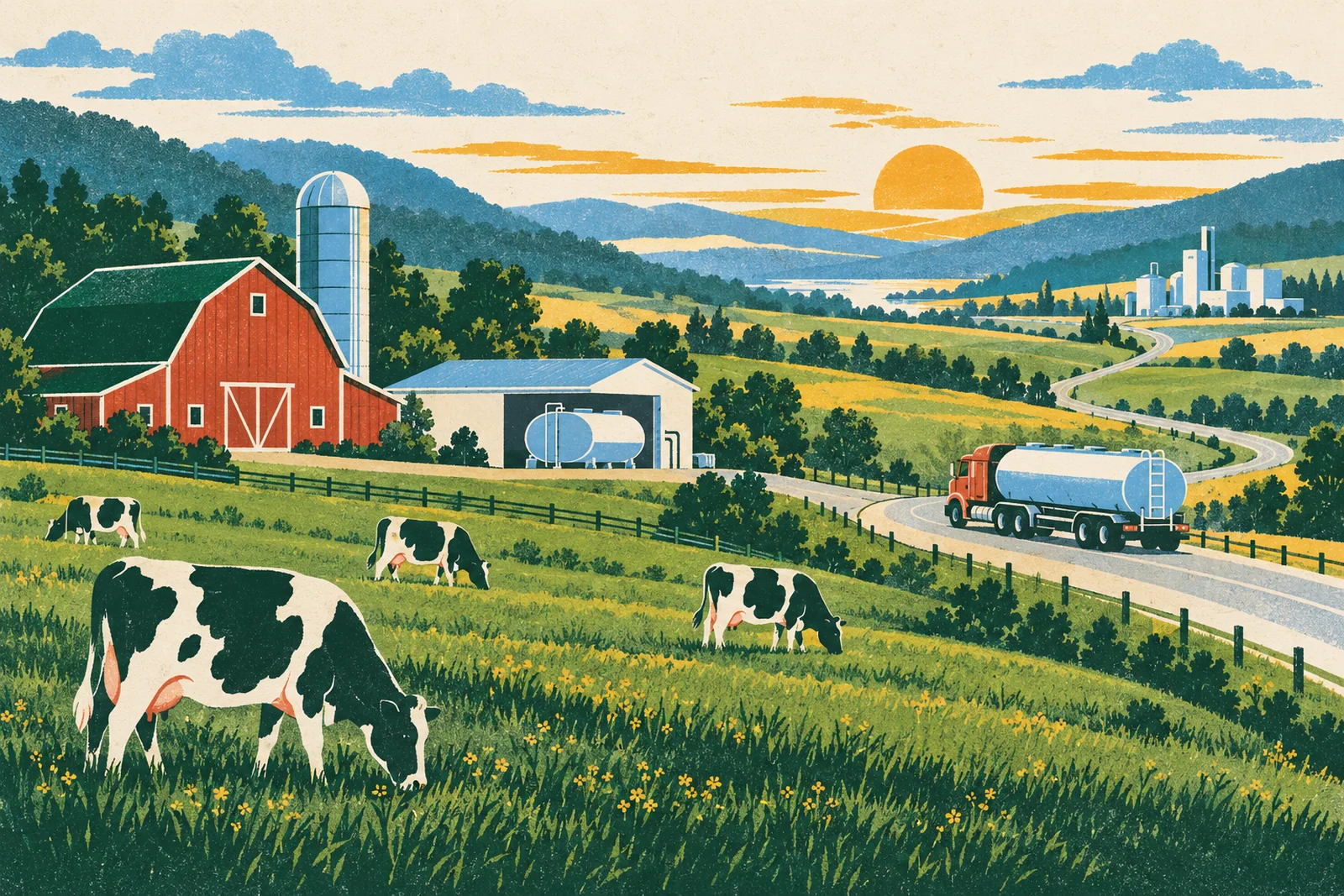
Raw milk is the combined result of the animal, genetics, feed, health, environment, facilities, utilities, people and management surrounding it. Improving only the final milking step cannot compensate for weakness across the rest of the farm system.
GEO Dairy therefore treats Upstream as one integrated biological-production system: from the first decisions about the farm and herd to the moment controlled raw milk leaves the farm for processing.