


For exampleKvemo Kartli
may combine significant milk production with access to Tbilisi.
An established dairy economy with a large family-farm base, strong regional production traditions and substantial room for productivity, quality and value-chain development.
Georgia already produces significant volumes of milk and dairy products, supports hundreds of thousands of dairy animals and maintains strong traditions in cheese and fermented dairy foods. At the same time, production remains highly fragmented, average animal productivity is relatively low, commercial infrastructure is uneven and domestic demand increasingly exceeds local supply.
For GEO Dairy, that combination defines the opportunity: modernize production without disconnecting it from local ownership, strengthen the businesses surrounding the farm, and connect raw milk, processing, logistics and markets into a more capable national dairy system.
A national dairy sector cannot be understood from milk-production volume alone. Herd structure, farm size, productivity, regional concentration, feed, processing, imports, consumption, quality systems, logistics and professional capabilities all affect the economics of a dairy investment.
This page brings those dimensions together so farmers, processors, investors, suppliers and partners can understand where Georgia’s dairy industry is today and where development opportunities may exist.
The opportunity is not one isolated gap. It is the gap between an existing dairy economy and a fully coordinated modern dairy system.
Geostat, Agriculture of Georgia 2025Final dataYear: 2025Verified 6 October 2026
The food-balance indicators (self-sufficiency, per-capita consumption) are on a milk-equivalent basis.
Georgia’s bovine and dairy-cow population has been declining. This is important because future growth cannot realistically depend only on keeping more low-productivity animals. Increasing productivity per healthy animal, improving reproduction and longevity, and producing more marketable milk from a better-managed herd become increasingly important.
841.0 thousand bovines -15.0%
412.5 thousand dairy cows -18.3%
Geostat, Agricultural Census 2024CensusVerified 6 October 2026
| Year | Bovines | Dairy cows |
|---|---|---|
| 2018 | 878.9 | 458 |
| 2019 | 869.5 | 441.8 |
| 2020 | 925.8 | 450.8 |
| 2021 | 928.6 | 451.7 |
| 2022 | 853.7 | 431.4 |
| 2023 | 837.7 | 418.7 |
| 2024 | 811.5 | 404.3 |
| 2025 | 761.6 | 382.7 |
Geostat, Agriculture of Georgia 2025Final data2018–2021 from Agriculture of Georgia 2021Verified 6 October 2026
National milk production has fluctuated rather than following a sustained upward productivity trajectory. This means Georgia already has a sizeable raw-milk base, but the sector has not yet converted that base into continuously increasing commercial output.
| Year | Million litres |
|---|---|
| 2018 | 555.3 |
| 2019 | 561.8 |
| 2020 | 569 |
| 2021 | 587.9 |
| 2022 | 564.8 |
| 2023 | 584.3 |
| 2024 | 574.4 |
| 2025 | 556.2 |
Geostat, Agriculture of Georgia 2025Final data2018–2021 from Agriculture of Georgia 2021Verified 6 October 2026
Georgia’s dairy industry remains overwhelmingly rooted in family holdings. Commercial agricultural enterprises are growing in importance, but they still represent a small proportion of the national dairy herd and milk output.
96.4% family holdings · 3.6% enterprises
93.6% family holdings · 6.4% enterprises
Geostat, Agriculture of Georgia 2025Final dataYear: 2025Verified 6 October 2026

This creates two possible development paths:
GEO Dairy presents the second as a major strategic opportunity rather than assuming only one model can modernize the sector.
Fragmentation can increase collection costs, complicate quality control, limit access to technology and make specialist services uneconomic at individual-farm scale. But fragmentation does not necessarily mean that all production must be consolidated into very large farms.
Selected capabilities can instead be shared:
The central development challenge is not simply farm size. It is access to capability.
Each holding must find every capability on its own.
Georgia’s national average milk yield remains low relative to the performance possible under specialized commercial dairy systems. Geostat reports average 2025 yield of approximately 1,716 litres per dairy cow and buffalo per year.
These are statistical averages across very different animals and production systems; they should not be interpreted as the performance ceiling of Georgian dairy farming.
litres per dairy cow & buffalo, 2025 · several other regions remain lower
Geostat, Agriculture of Georgia 2025Final dataVerified 6 October 2026
genetics+nutrition+forage+health+fertility+comfort+water+milking+management
million litres, 2025
Geostat, Agriculture of Georgia 2025Final dataVerified 6 October 2026
A region with high current milk production is not automatically the best location for every dairy investment. Dairy farming, feed production, heifer rearing, processing and distribution each depend on different combinations of land, climate, irrigation, feed, workforce, milk density, utilities and market access.
may combine significant milk production with access to Tbilisi.

may be relevant for feed crops and modern commercial agriculture.
has a cooler livestock-production environment.

contain substantial traditional dairy production bases.
These claims are expanded quantitatively on the Regions & Opportunities pages rather than fully analyzed here.
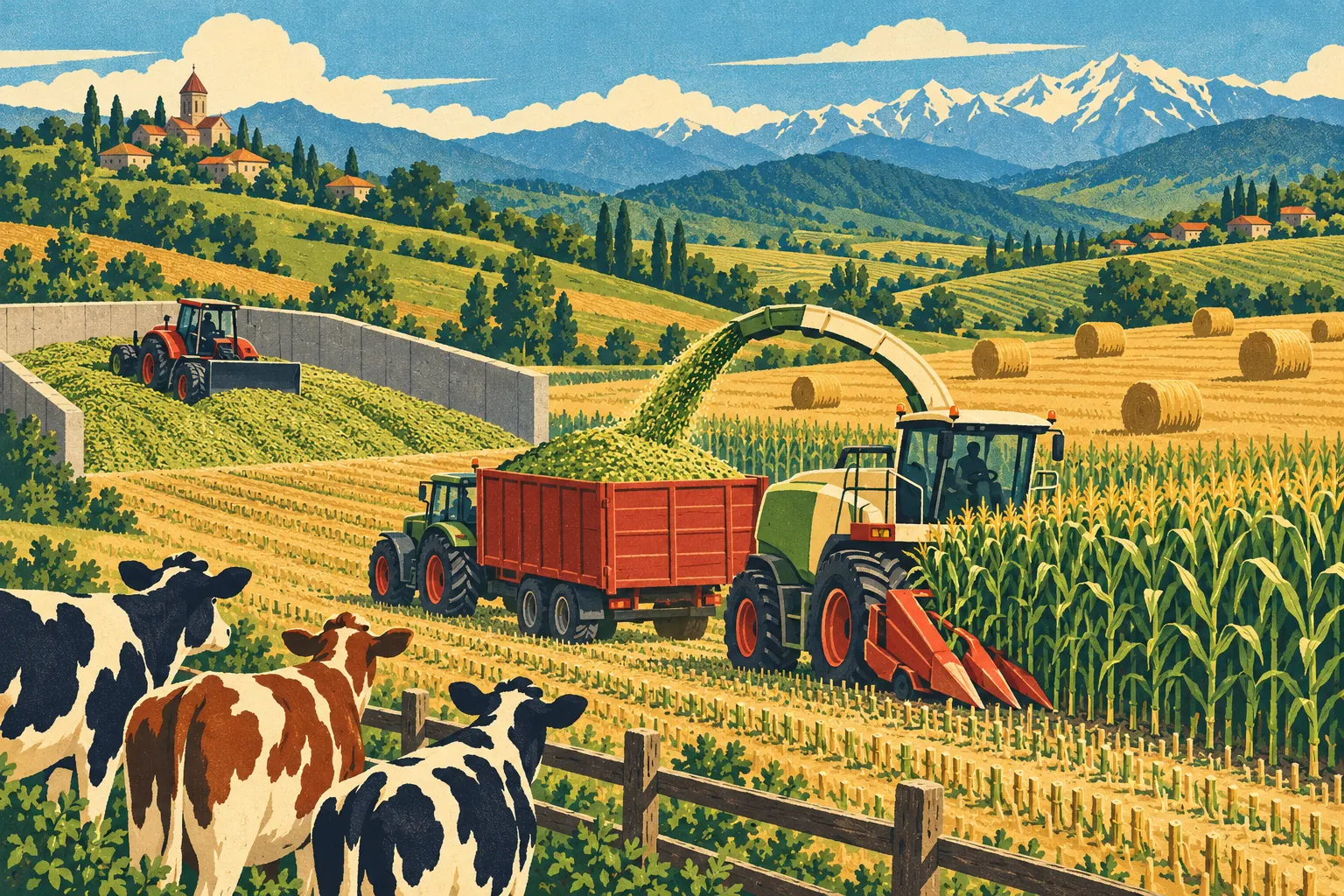
Feed represents one of the largest costs in commercial milk production and one of the largest determinants of animal performance. Improving dairy therefore requires development outside the barn as well as inside it.
The relevant system includes:
Georgia produced about 209 thousand tonnes of maize in 2025, illustrating an existing crop base, but national crop production is not equivalent to dairy-ready feed availability; quality, dry matter, harvest timing, storage and logistics remain critical.
Geostat, Agriculture of Georgia 2025Final dataMaize, thousand tonnesVerified 6 October 2026
Opportunity for specialist:
A modern dairy population requires systematic breeding rather than occasional animal replacement. Genetics, artificial insemination, reproductive records, calf survival and replacement-heifer development determine the long-term productivity of the national herd.
Georgia’s falling number of dairy cows reinforces the importance of producing fewer but more productive, healthy and longer-lived replacement animals rather than relying only on herd expansion.

Mastitis, fertility problems, lameness, calf mortality, metabolic disease and weak transition management can reduce output long before the problem becomes visible in annual milk-production statistics.
The national opportunity is therefore not merely more veterinary treatment, but stronger preventive herd-health systems supported by:
This section links directly into GEO Dairy’s Health, Breeding and Herd offerings.
Animal housing affects feed intake, health, reproduction, cleanliness, labor efficiency and milk output. Modern dairy development therefore requires appropriate ventilation, cooling, bedding, cow flow, water access, handling facilities and biosecurity.
Georgia’s climatic diversity means one barn concept should not automatically be copied into every region.
The value of milk is influenced not only by the cow but by how the milk is harvested, cooled, stored and tested. Modern farms require hygienic milking, reliable cooling, cleaning systems, measurement and traceability.
A stronger commercial raw-milk system should progressively reward measurable quality characteristics rather than volume alone.
Specific commercial acceptance standards are managed in operational and quality systems rather than hard-coded on this overview page.
Where milk is produced by many geographically dispersed holdings, collection becomes a critical part of the industry. Transport time, cooling, testing, traceability and lot segregation determine whether fragmented raw milk can become dependable industrial supply.
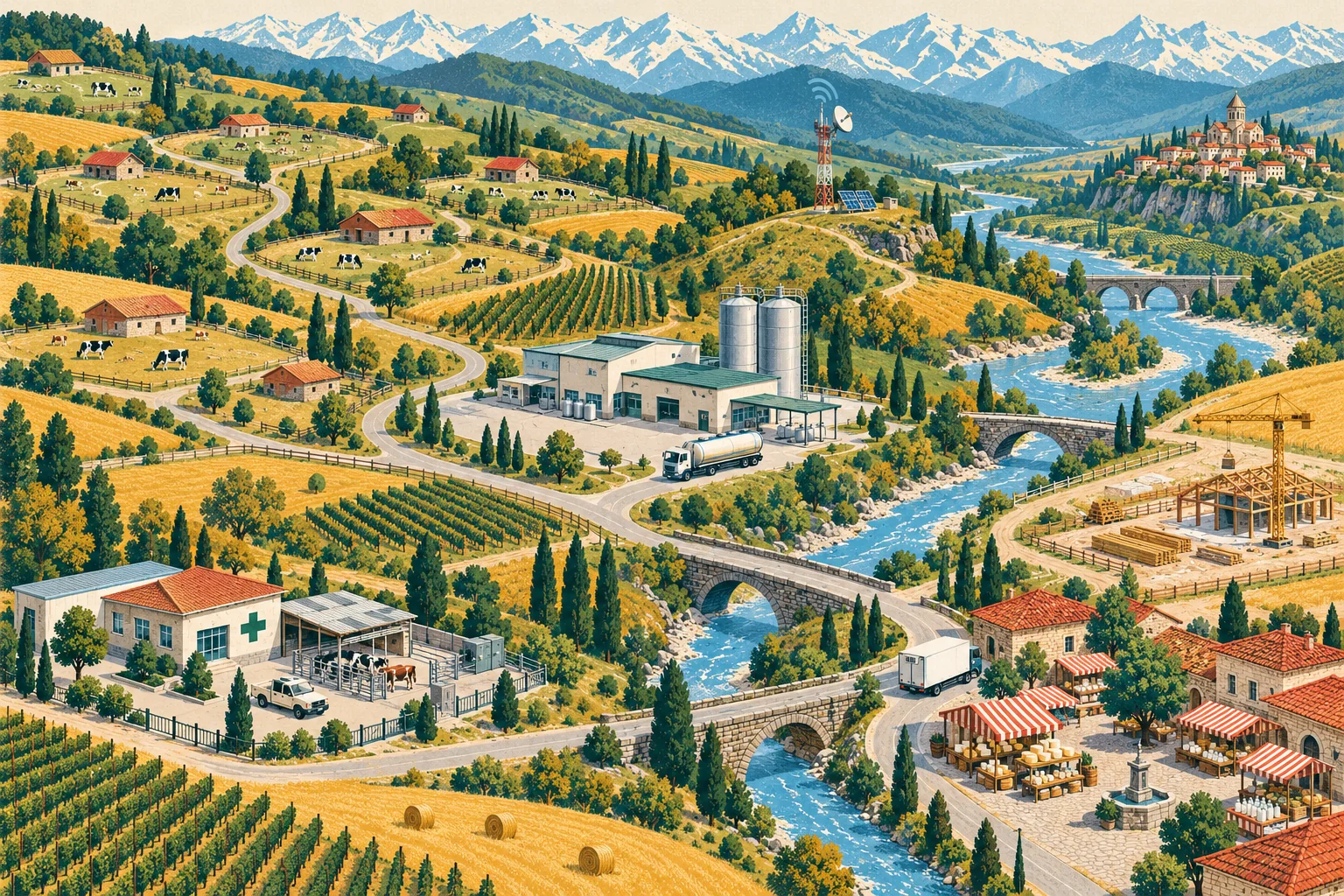
This is particularly relevant wherever processors cannot economically source only from large commercial farms.

Georgia has an established dairy-processing market ranging from traditional and small-scale cheese production to larger industrial dairy processors. The future opportunity is not simply additional factory capacity; it is reliable alignment between raw-milk supply, plant capacity, product mix, technology and market demand.
Key development areas include:
A processor count will be published once there is a verified live dataset based on business and NFA records.

Cheese has a particularly important place in Georgian dairy consumption and food culture. Traditional products create an opportunity to combine local identity with modern milk quality, standardized processing, controlled maturation, food safety, packaging and commercial branding.
Modernization should not mean replacing traditional products with generic commodities. It can allow traditional products to become safer, more consistent and more valuable.
A bridge to Dairy Award and Trade.
Geostat’s 2025 food balance reports per-capita consumption of milk and dairy products equivalent to approximately 201 kg of milk per year. Total food use reached about 793 thousand tonnes on the same milk-equivalent basis.
Georgia already has a substantial dairy market; the development challenge is how much of that market domestic production can serve competitively.
Geostat, Agriculture of Georgia 2025Final dataFood balance, milk-equivalentVerified 6 October 2026
Each glass ≈ 10 kg, milk-equivalent
Georgia’s milk-and-dairy self-sufficiency ratio fell to 68% in 2025. On Geostat’s food-balance basis, domestic production was about 556 thousand tonnes milk-equivalent, imports about 264 thousand tonnes and exports about 7 thousand tonnes.
In 2024, self-sufficiency had been 74%; the 2025 deterioration reflected both lower domestic production and higher imports.
The supply gap is an opportunity only where Georgian production can compete on quality, consistency and economics.
Geostat, Agriculture of Georgia 2025Final dataFood balance, milk-equivalentVerified 6 October 2026
68%self-sufficiency in 2025
Available in Georgia: 813 thousand tonnes
Thousand tonnes, milk-equivalent. Available = production + imports − exports, calculated from the food balance.
| Year | Production | Imports | Exports | Self-sufficiency % |
|---|---|---|---|---|
| 2022 | 565 | 175 | 3 | 77 |
| 2023 | 584 | 197 | 5 | 75 |
| 2024 | 574 | 213 | 7 | 74 |
| 2025 | 556 | 264 | 7 | 68 |
Imported dairy products are not only competition. They also provide information about product categories, quality levels, formats and price points for which domestic demand already exists.
The dashboard draws on current customs and Geostat trade datasets rather than static website text.
Awaiting live customs and Geostat trade data
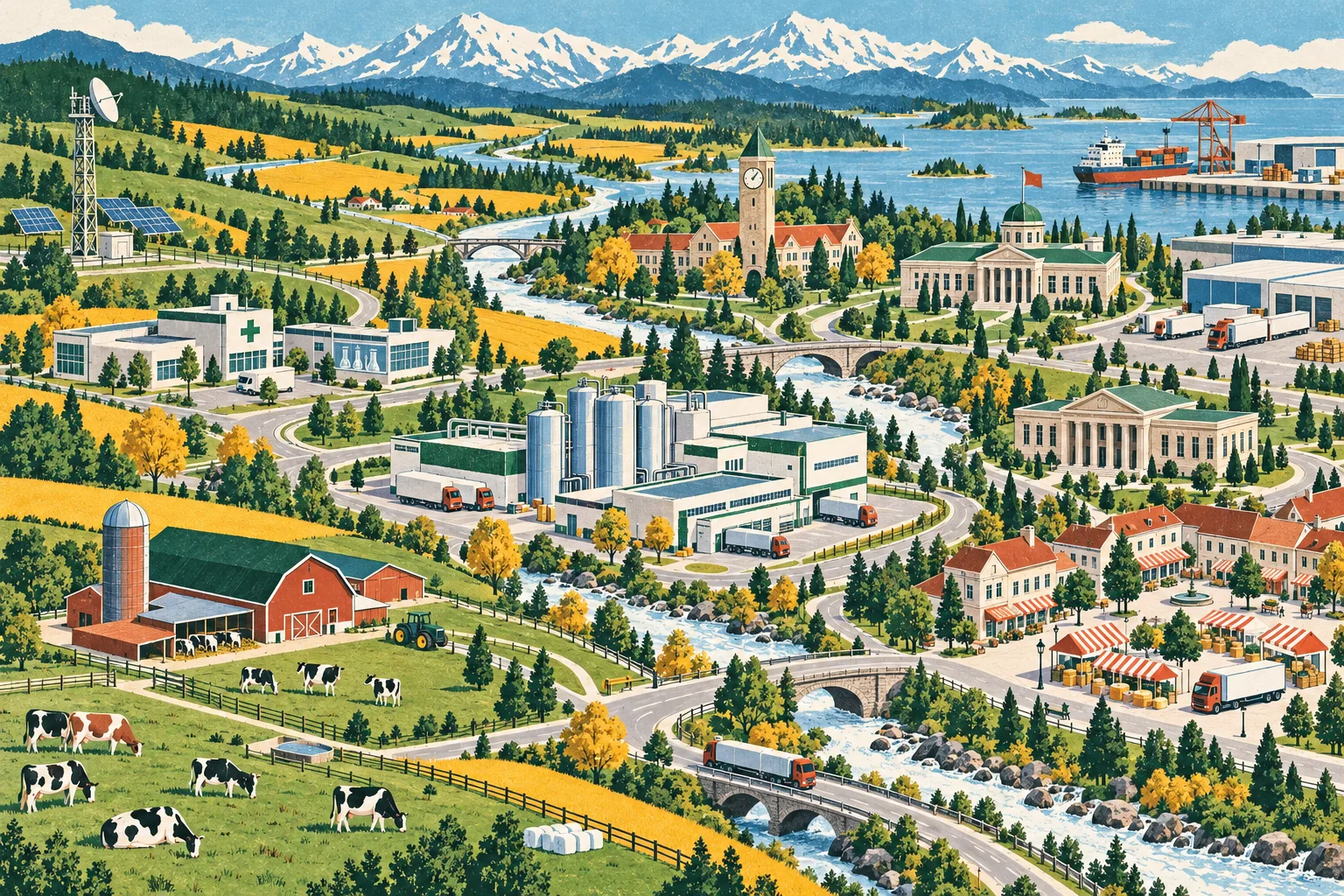
Georgia’s location and trade relationships may support dairy exports, particularly for differentiated products. But export development requires more than surplus production.
Export readiness depends on:
Build export capability first. Export volume follows.
A modern dairy market depends on the ability to distinguish safe, compliant, traceable milk and products from supply that does not meet the required standard.
That requires improvement in:
As more milk moves into professional commercial channels, quality measurement can increasingly become part of pricing and supplier management.
Cooling is required from the farm milk tank through processing, storage, transport and retail. Failure anywhere along that chain can shorten shelf life, damage quality or convert valuable food into waste.
The development opportunity is a dairy-specific integrated cold chain, not cold storage alone.
Point at a link to break the chain.
7.8% of the 340.8 thousand tonnes stored in surveyed cold-storage facilities in 2024 were milk products, demonstrating dairy’s existing use of shared refrigerated infrastructure.
Geostat, Survey of Slaughterhouses, Elevators and Cold Storage Facilities (2024)Final dataVerified 6 October 2026
Higher-performing dairy systems require veterinarians, nutritionists, breeding specialists, farm managers, milking technicians, refrigeration technicians, food technologists, laboratory staff, automation specialists, quality managers and logistics professionals.
The industry therefore has two parallel workforce needs:
This is one reason shared Village and municipality-level services can be strategically important.
Low productivity can rarely be solved without capital, but capital by itself does not solve low productivity. Successful modernization requires investment in the correct combination of animals, feed systems, housing, milking, management and market access.
Digitalization can be particularly valuable where physical production is decentralized. Individual farms do not need large IT departments if animal records, milk-quality results, breeding, veterinary activity, feed, collection and commercial data can operate through shared platforms.
Digital coordination of physical businesses—not technology for its own sake.
Dairy modernization must account for water, energy, manure, wastewater and nutrient management from the beginning. Higher animal productivity may improve output efficiency, but more intensive systems can also concentrate manure, water demand and environmental risk.
These are particularly relevant as farming becomes more commercially concentrated.
Production per dairy animal remains limited.
Most cows and milk remain in family holdings.
Fewer animals increase the need for productivity and replacement efficiency.
Feed quantity alone does not guarantee ration quality.
Commercial processors need consistent, traceable milk.
Professional capability is expensive to duplicate farm by farm.
Many businesses need more than financing—they need finance-ready projects.
Farm, processing, logistics and market decisions are often insufficiently coordinated.
The opportunity side mirrors the challenges:
Dairy Grid is intended to respond to several characteristics visible in Georgia’s current dairy landscape: family ownership, fragmented production, low average productivity, limited specialist access and the need for stronger coordination between feed, animals, milk, processing and markets.
The model does not require every farm to become a large vertically integrated business.
Keep ownership distributed. Build capability at the scale where it works best.
GEO Dairy’s structure mirrors the needs visible in Georgia’s dairy landscape.
The objective is not to solve one isolated dairy problem, but to make the connections between those solutions commercially workable.
Dairy statistics change each year and sometimes move between preliminary and final publication. GEO Dairy therefore distinguishes clearly between provisional and final data and shows the reference year and source for every major indicator.
The website uses the final annual value once released rather than preserving an outdated preliminary figure.
Understand the strategic case.
OpenUnderstand how to establish and finance the project.
OpenUnderstand the national dairy sector.
You are hereIdentify where different projects fit.
In preparationGeorgia already has the animals, farmers, dairy traditions, processors, consumers and regional production base of a functioning dairy economy. The challenge is to raise productivity, professionalize the systems around production and connect those businesses more effectively to processing and markets.
That is why GEO Dairy sees Georgia not as an empty market waiting to be created, but as an existing dairy landscape ready for its next stage of development.