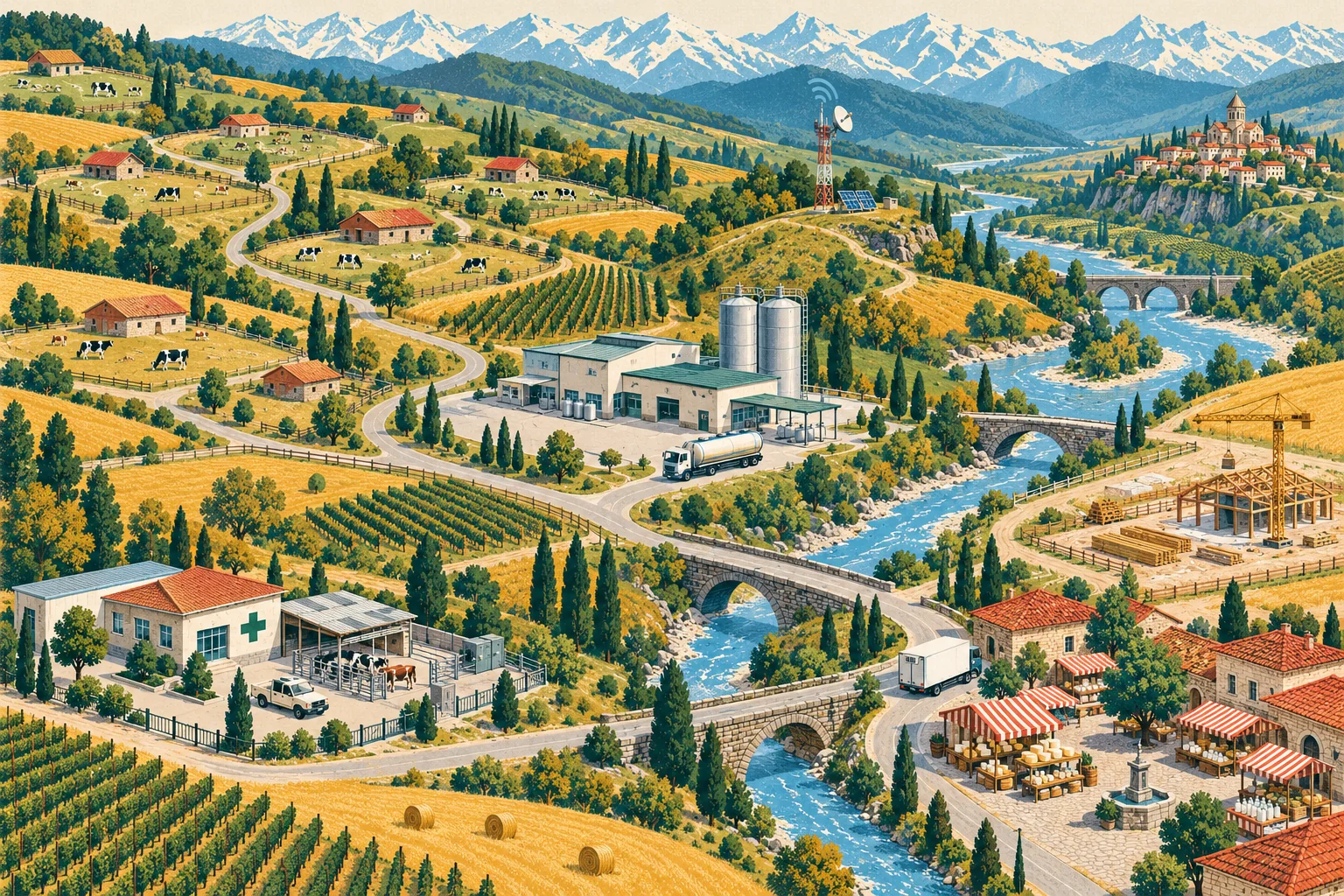
A farm depends on
- Genetics
- Feed
- Veterinary care
- Equipment
- Finance
- Utilities
- Transport
- A reliable buyer
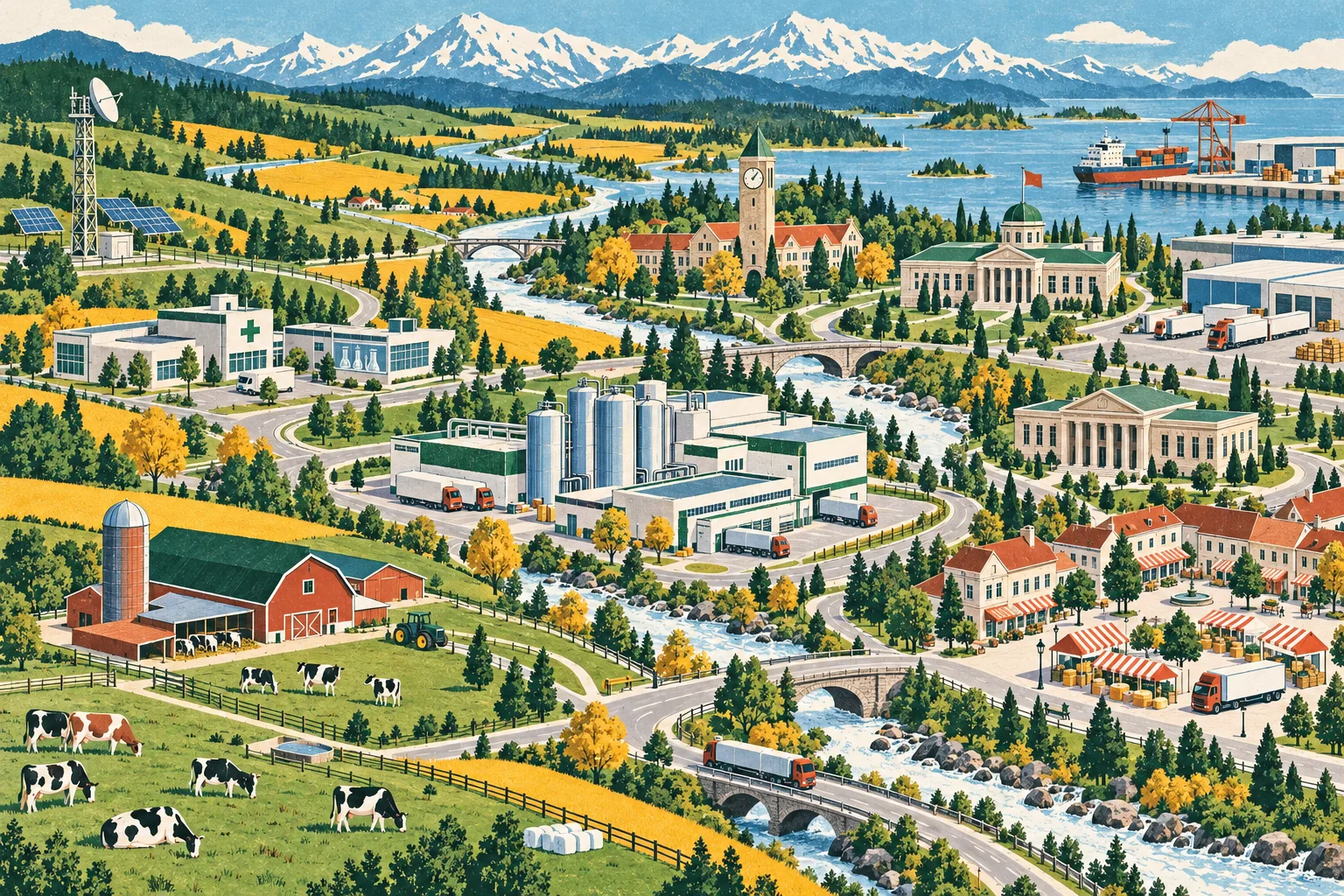
A dairy industry is more than farms and factories. It is a connected system of businesses, people, institutions, technology, finance and markets.
GEO Dairy approaches dairy development as an ecosystem. Raw milk production, processing, logistics, retail and consumption depend on a much wider network of specialists, suppliers, financiers, regulators, educators, technology providers and commercial partners. Strengthening the connections between these participants is essential to building a more capable and competitive dairy industry in Georgia.
 1Businesses2People3Institutions4Technology5Finance6Markets
A dairy ecosystem is the complete network of organizations, businesses, professionals, resources and relationships required to move dairy from biological production to finished products and ultimately to the consumer.
A farm may produce excellent milk, but its performance still depends on genetics, feed, veterinary care, equipment, finance, utilities, transport and a reliable buyer. A processor depends on raw-milk quality, engineering, packaging, skilled operators, laboratories, cold chain and market demand. Retail and distribution depend on reliable production, logistics, commercial systems and consumers.
The industry therefore performs according to the strength of the connections between its parts, not only according to the performance of any single participant.


The competitiveness of the dairy industry is a system outcome.
These three stages form the productive core of the dairy industry, but each depends on a larger enabling ecosystem surrounding it.
Explore the Dairy Industry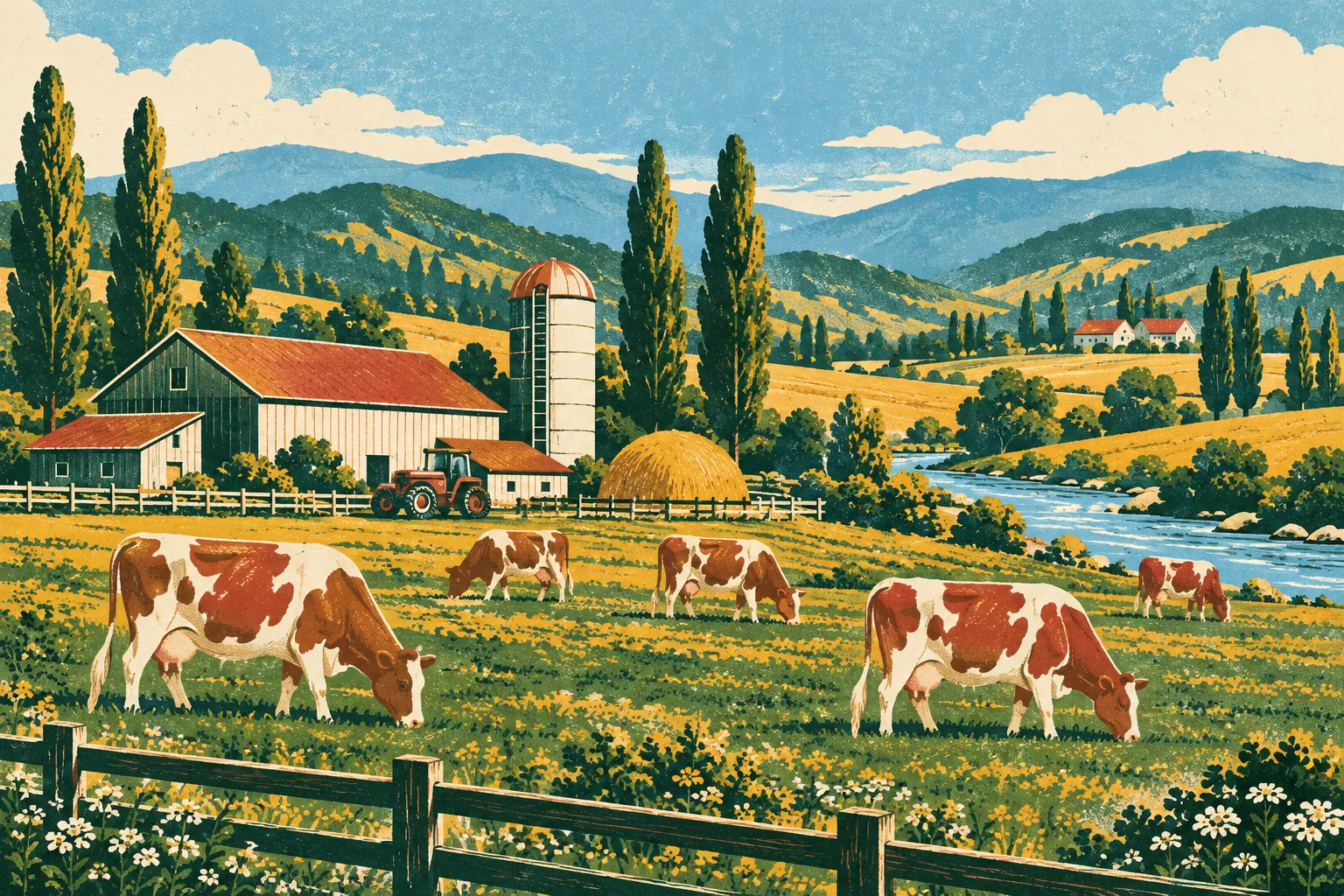
Herds, breeding, animal health, nutrition, farms, milking and raw-milk production.

Milk reception, processing, packaging, quality assurance and dairy manufacturing.

Distribution, logistics, commercial channels, retail, order fulfillment and access to consumers.

The value chain sits at the center. Ten enabling groups surround it, and a network of participants surrounds the whole structure. Select a group to see the role it plays.
Dairy problems are often treated individually: low milk yield as a feeding problem, poor product quality as a factory problem, weak sales as a marketing problem, or financing difficulties as a banking problem. In reality, many of these challenges cross several parts of the ecosystem.
The right solution often requires coordinated action across several participants rather than one isolated intervention.
may involve
may involve
may involve
The objective is not to replace these participants with one vertically integrated organization. A healthy ecosystem allows specialized businesses to remain independent while making it easier for them to find each other, coordinate, transact and operate to shared professional standards.
Farmers, calf-rearing businesses, feed centers, processors, packers, distributors and retailers.


Veterinarians, nutritionists, engineers, consultants, laboratories, installers and service companies.


Equipment manufacturers, input suppliers, software companies, automation providers and infrastructure companies.


Banks, leasing companies, insurers, investors, government bodies, development organizations and universities.

Processors, wholesalers, retailers, foodservice, institutions, exporters and consumers.
GEO Dairy is positioned inside this ecosystem as a dairy-specialized connecting and operating platform. Depending on the requirement, we may provide capabilities directly, coordinate qualified partners, develop projects, supply resources, connect finance, organize commercial relationships or participate in production.
Connect knowledge, institutions, people, information and industry networks.
Provide professional capability across Advisory, Engineering, Implementation, Operations and Development.
Connect dairy businesses with Infrastructure, Equipment, Inputs, Finance and Workforce.
Connect finished dairy products with buyers and markets.
Develop and participate in dairy production businesses and scalable production models.
The five GEO Dairy directions are therefore not isolated businesses. They are different ways of connecting and strengthening the same dairy ecosystem.
GEO Dairy's ecosystem approach is based on the idea that ownership and coordination can be separated. Farms, processors, transporters, service providers and other businesses can remain independently owned while sharing selected capabilities, standards, technologies and market relationships.
This allows entrepreneurial responsibility to remain local while specialized functions can be organized at the scale where they are most efficient.
May be shared across several farms.
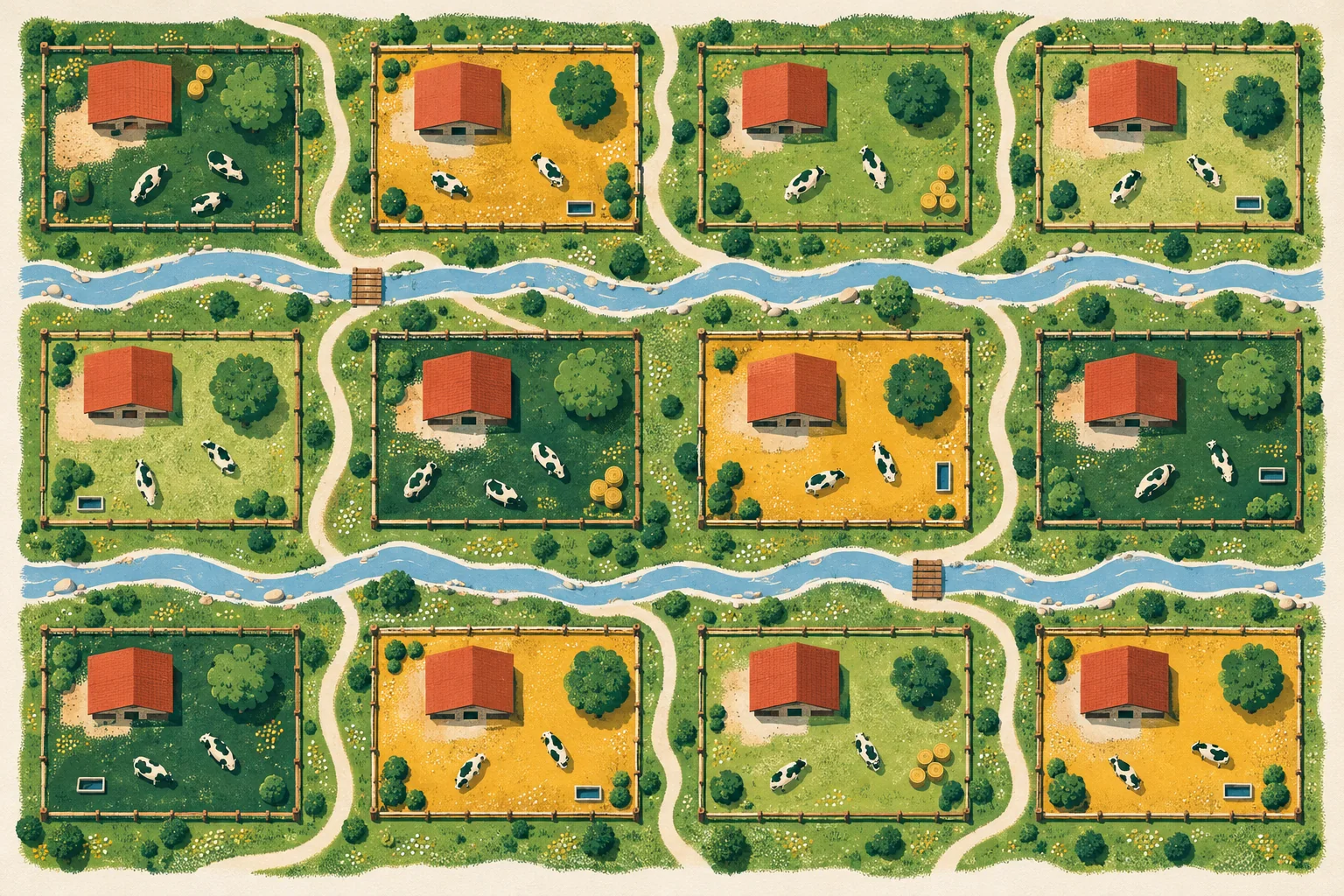
The right scale for each activity.
Not every capability should be centralized and not every capability should be duplicated at every farm or business. Ecosystem design means placing each function where it can deliver the best combination of responsiveness, professionalism and economic efficiency.
Genetics, technology platforms, standards, finance relationships, market development and strategic coordination.
Higher-capacity infrastructure, distribution and coordination.
Aggregation, larger processing and support capabilities, and logistics.
Shared specialist services and activities with local economies of scale.
Daily production and direct operational responsibility.
Dairy Grid is one of the clearest applications of GEO Dairy's ecosystem approach. It connects independently owned businesses through a structured multi-level network in which production remains distributed while selected services, supplies, technology, processing and market functions are coordinated across the Grid.
The model is designed so that a Family Farm does not need to reproduce every capability internally. Specialist veterinary care, feed preparation, calf management, genetics, processing, digital systems, logistics and other functions can be organized at the level where they make the greatest operational and economic sense.
Explore Dairy GridModern dairy ecosystems require more than physical connections. Information must also move between farms, service providers, processors, laboratories, logistics providers, financiers and markets.
Digital systems can help connect animal records, milk quality, production data, service history, inventory, traceability, transport, financial information and commercial activity into more coordinated decision-making.
The long-term objective is not simply to digitize individual businesses, but to make the ecosystem itself easier to coordinate.
 FarmsLaboratoriesProcessorsFinanceLogisticsMarkets
Networks become valuable only when participants can trust the quality of what is exchanged. Professional qualifications, technical specifications, food safety, animal health, traceability, commercial terms and performance expectations therefore need clear standards.
GEO Dairy's long-term ecosystem model is intended to support qualification and transparency across participants, whether they are service providers, suppliers, contractors, finance providers, workforce specialists or production businesses.
One of the most practical functions of a dairy ecosystem is matching demand with capability. A farmer may need an engineer. A processor may need equipment. A supplier may be looking for buyers. A bank may be looking for finance-ready dairy projects. A veterinarian may be looking for farms to serve.
GEO Dairy's website, portfolio structure and Navigator are being designed around this principle.
 NavigatorUnderstands the need and finds the route
 Qualified providerA qualified engineering provider
 Qualified providerA qualified equipment supplier
 Qualified providerA commercial partner
 Qualified providerA prepared project and its sponsor
 Qualified providerA farm that needs the expertise
An illustration of the loop. The path depends on the specific need.
Use GEO Dairy NavigatorAn industry becomes more resilient when businesses do not depend on a single supplier, specialist, customer or financing route. A deeper ecosystem creates alternatives, competition, specialization and stronger incentives to improve.
Over time, GEO Dairy aims to support a market in which dairy businesses can more easily identify qualified services, reliable suppliers, financing options, skilled people, commercial partners and investment opportunities.
This describes the direction GEO Dairy is working toward, not a market that exists in full today.


Training, research, laboratories, universities and professional networks are not peripheral activities. They influence productivity, disease control, food safety, technology adoption, product development and management quality throughout the industry.
The future GEO Dairy Ecosystem direction is intended to strengthen these connections through platforms and programs that support knowledge exchange, skills and professional cooperation.
Distributed dairy production network.
Explore Dairy Grid
Education, professional development and industry capability.
Commercial and market connectivity.

Professional dialogue, networking and knowledge exchange.

A public-facing dairy platform and space that can later be described in detail.

Recognition of performance, innovation and contribution to the dairy industry.
Georgia is GEO Dairy's starting point for building an integrated dairy ecosystem. The country's dairy industry includes traditional household production, commercial farms, processors, traders, retailers, institutions and a wide range of emerging technical and commercial participants.
The opportunity is not only to increase individual production capacity, but to strengthen the connections between these participants so knowledge, capital, technology, services and markets can move more effectively through the industry.
Explore GeorgiaIndependent businesses capable of generating sustainable returns.
Building a national dairy ecosystem requires participation from across the industry. Farmers, processors, experts, suppliers, contractors, finance providers, investors, technology companies, universities, institutions, distributors and other organizations can contribute different capabilities.
I am one of the…
Find the expertise, supplies, finance, people or markets a dairy project requires.
Start with a need
Introduce a service, product or capability to dairy businesses that are looking for it.
Offer a capabilityDiscuss a structured way to contribute to dairy-industry development.
Explore partnershipThe objective of a national dairy ecosystem is not centralization for its own sake. It is to make professional capability accessible, reduce fragmentation, improve coordination and allow individual dairy businesses to perform better within a stronger industry around them.
GEO Dairy's role is to help build those connections: between production and markets, businesses and specialists, investment and opportunity, technology and practical use.