
01Owner-Operator
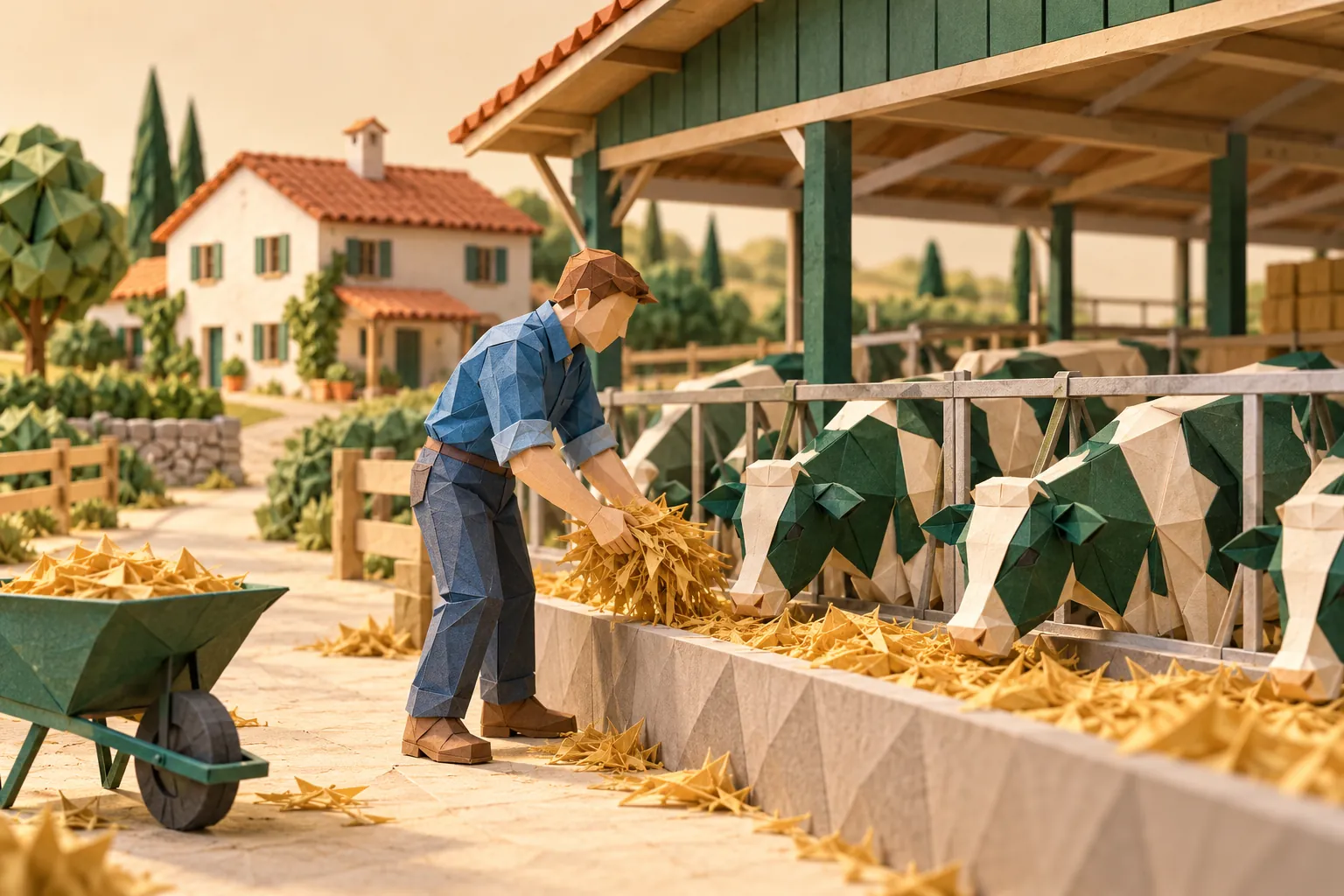
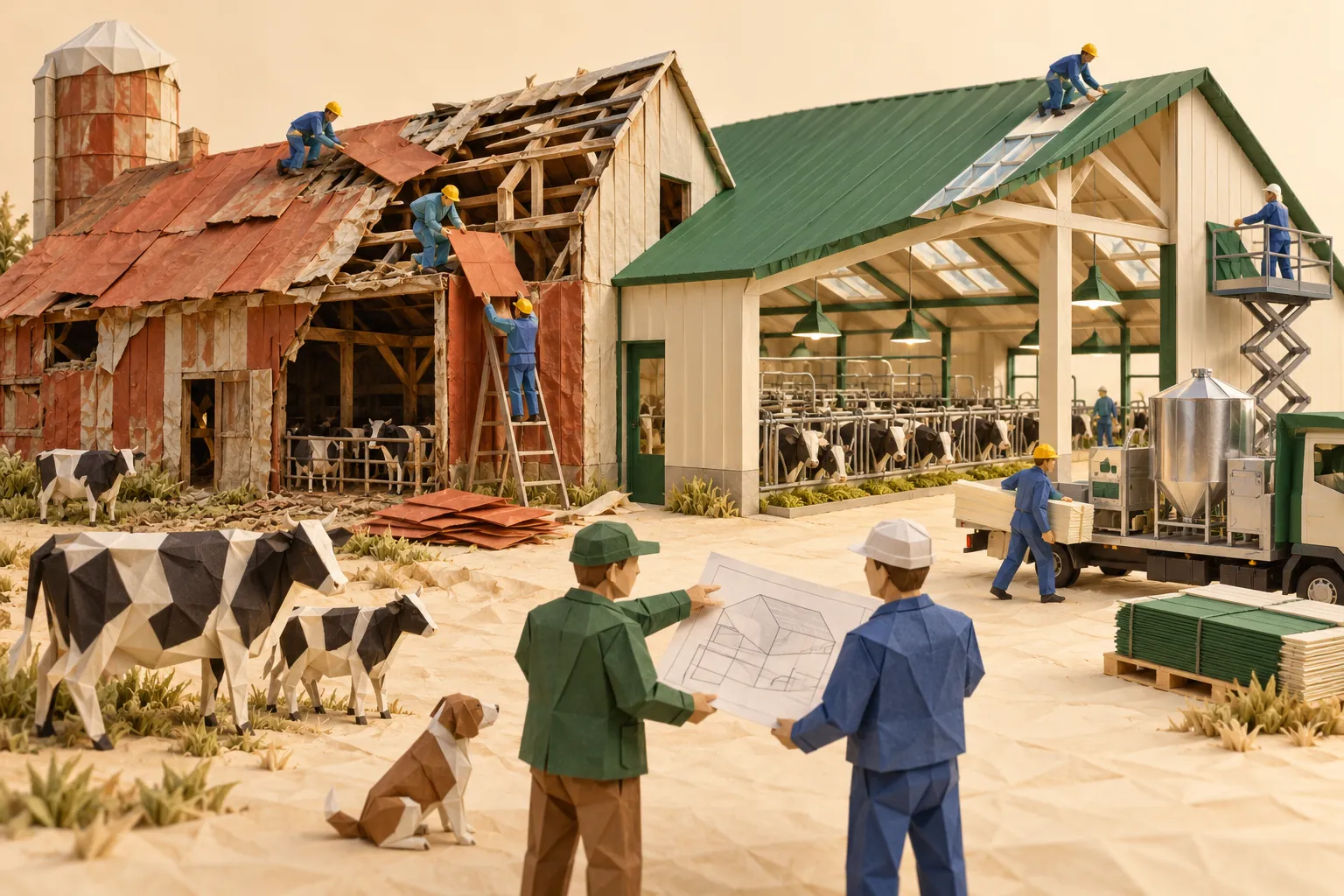
The investor owns and actively manages the dairy business.
From company formation and land to finance, regulation, incentives and dairy investment pathways.
Georgia offers a relatively straightforward framework for establishing and operating a business, but dairy investments involve more than company registration. Farms, processing plants, feed businesses, logistics operations and other dairy projects must bring together legal structure, land, finance, technical design, food and veterinary requirements, workforce and market access.
Dairy project file
A company can be registered quickly, but a successful dairy investment requires the complete project to work. The investor must still select the right business model, site, legal structure, technical concept, capital structure, management team and route to market.
“How do I register a company?”
“How do I build a viable dairy business in Georgia?”
Investment readiness means aligning the business, technical, legal and financial sides of the same project.
A compact reference rather than a page of macro statistics. Each figure carries its source and the date it was last checked.
GDP, 2025
GEL104.6billion
Nominal GDP, preliminary
GeostatVerified 6 October 2026
Real GDP growth, 2025
7.5%
Year on year, preliminary
GeostatVerified 6 October 2026
GDP per capita, 2025
USD10,296.5
Preliminary
GeostatVerified 6 October 2026
Foreign direct investment, 2025
USD1.90billion
Adjusted data
GeostatVerified 6 October 2026
Legal-entity registration
GEL200
One working day
NAPRVerified 6 October 2026
Same-day registration
GEL400
Same-day filing
NAPRVerified 6 October 2026
Georgia allows entrepreneurs to establish a legal business entity through the National Agency of Public Registry. Once incorporation documents, founders and the legal address are ready, company registration itself can be completed quickly.
Registration does not by itself authorize every activity.
GEL 200 one working day · GEL 400 same day Verified 6 October 2026
Economic-activity registration: GEL 39 within two working days · GEL 78 same day To confirm · listed 6 October 2026
Depending on the project
The appropriate structure depends on what the investment needs:
For most ordinary commercial projects, the LLC is likely to be the natural starting structure, but it is not universal.
The natural starting structure for most ordinary commercial projects. Not universal.
Capital and capability shared with a partner under one project company.
Enter through a business that already operates.
A Georgian company owned by an existing group.
Where appropriate for the activity and liability position.
Combine with a producer that already has land, herd or market.
Only where the model genuinely fits.
Foreign investors can participate in Georgian business projects through appropriate Georgian or foreign corporate structures, subject to the applicable rules governing the activity, land and investment.
Investing in the business
Corporate structure, ownership, governanceOwning agricultural land
Special ownership rules applyFor dairy, these are not the same legal question. The land comes first.
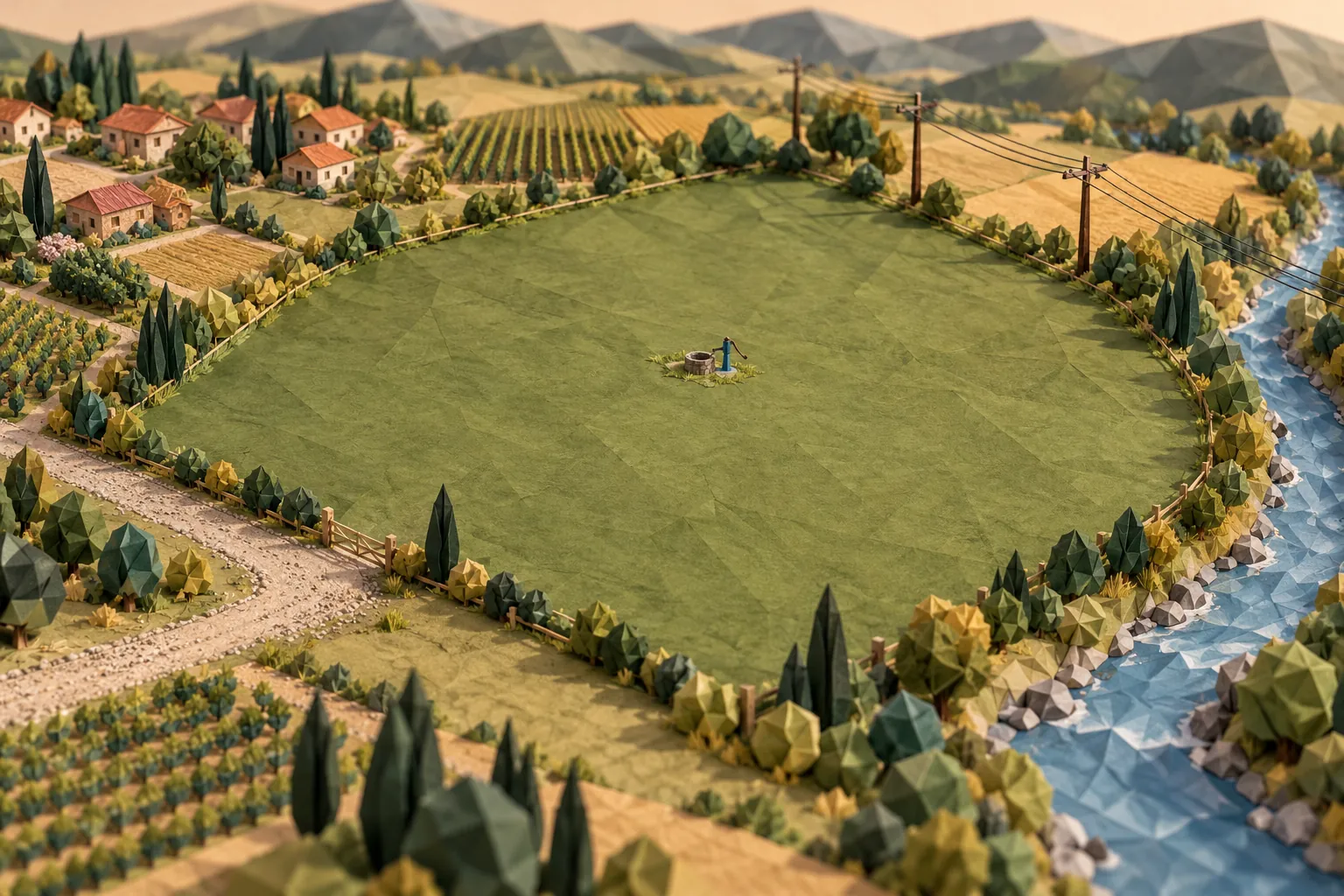
Agricultural land is subject to special ownership rules in Georgia. Foreign dairy investors should resolve land ownership, lease or investment-plan structure before assuming that the project land can simply be acquired through a foreign-owned company.
Organic Law on Agricultural Land Ownership (Matsne) To confirm · listed 6 October 2026
Ownership of agricultural land under the general rules.
Not the same unrestricted ownership position as a Georgian citizen.
May own agricultural land only in specified circumstances, including a Government decision based on an approved investment plan.
Choose the land structure before finalizing the corporate and financing structure.
A farm or plant site should be assessed technically and legally before purchase or long-term commitment.
1 of 9 inspected
Georgia applies a 15% general profit-tax rate and uses a distributed-profit model for ordinary companies: the tax system focuses on distributions and specified taxable payments rather than simply taxing all retained accounting profit every year. VAT is generally 18%, and a natural person’s general taxable-income rate is 20%.
15%
Profit tax
General rate; distributed-profit model for ordinary companies
18%
VAT
General rate
20%
Personal income tax
General rate for a natural person's taxable income
Dairy projects are often capital intensive and may need several years of reinvestment in livestock, equipment, feed systems, processing, cold chain or expansion. Georgia’s distributed-profit framework can therefore be particularly relevant when profits are retained in the business rather than immediately distributed.
The timing and tax treatment of retained or distributed earnings should be confirmed for the actual transaction.
A dairy investment may import cattle, genetics, milking equipment, processing machinery, refrigeration, laboratory systems, packaging equipment and specialist inputs. VAT, customs classification and preferential origin can materially affect project cash flow.
The price on the quote is not the landed cost
Illustrative proportions, not data. Model the real figures for each purchase.
Georgia’s network of trade agreements can support businesses seeking to import technology and inputs or develop export markets. However, dairy products remain subject to sanitary, veterinary, rules-of-origin and destination-market requirements.
= an export strategy
A free-trade agreement is one part of it, not proof that a dairy product is market-ready.
Enterprise Georgia combines business-development, export-support and investment functions. Its Invest in Georgia division acts as an interface between foreign investors and government bodies, and describes itself as a one-stop shop supporting investors before, during and after the investment process.
We link to the institution rather than copying its programmes. Enterprise Georgia
Georgia’s Rural Development Agency launched the State Agricultural Co-Financing Programme in July 2026. It covers primary agricultural production as well as agricultural processing and storage, and includes livestock farms among its primary-production components.
Exact dairy conditions and eligible costs must be verified for the specific application.
Dairy projects can combine owner equity, bank debt, leasing, supplier finance, public co-financing, guarantees or other funding mechanisms. The right structure depends on what is being financed and when cash flow is generated.
Funding needTypical mechanism
Finance providers need more than a business idea. A dairy project should normally have a defined capacity, site, technical scope, investment budget, operating model, market assumptions and implementation schedule before serious financing discussions.
Dairy businesses operate under rules covering food and feed safety, veterinary matters, animal health and welfare, traceability, imports and exports, among other requirements. The applicable obligations depend on where the business sits in the value chain.
Food/Feed Safety, Veterinary and Plant Protection Code (Matsne)
Company registration≠Permission to operate a dairy facility
The obligations that apply depend on the activity: choose one to trace it through the rule areas.
Georgia’s Food/Feed Safety, Veterinary and Plant Protection Code requires business operators to be registered. Activities involving production or processing of food of animal origin are generally subject to recognition, subject to the specific statutory exceptions, and an operator subject to recognition may not operate without it.
The company exists
As a food business operator
For production or processing of food of animal origin, unless an exception applies
Applicable food businesses must implement food-safety procedures based on HACCP principles, while primary production is treated differently under the Code. Traceability is required through production, processing and distribution.
For a dairy factory, food safety should shape the facility from the engineering stage, not be added after commissioning.
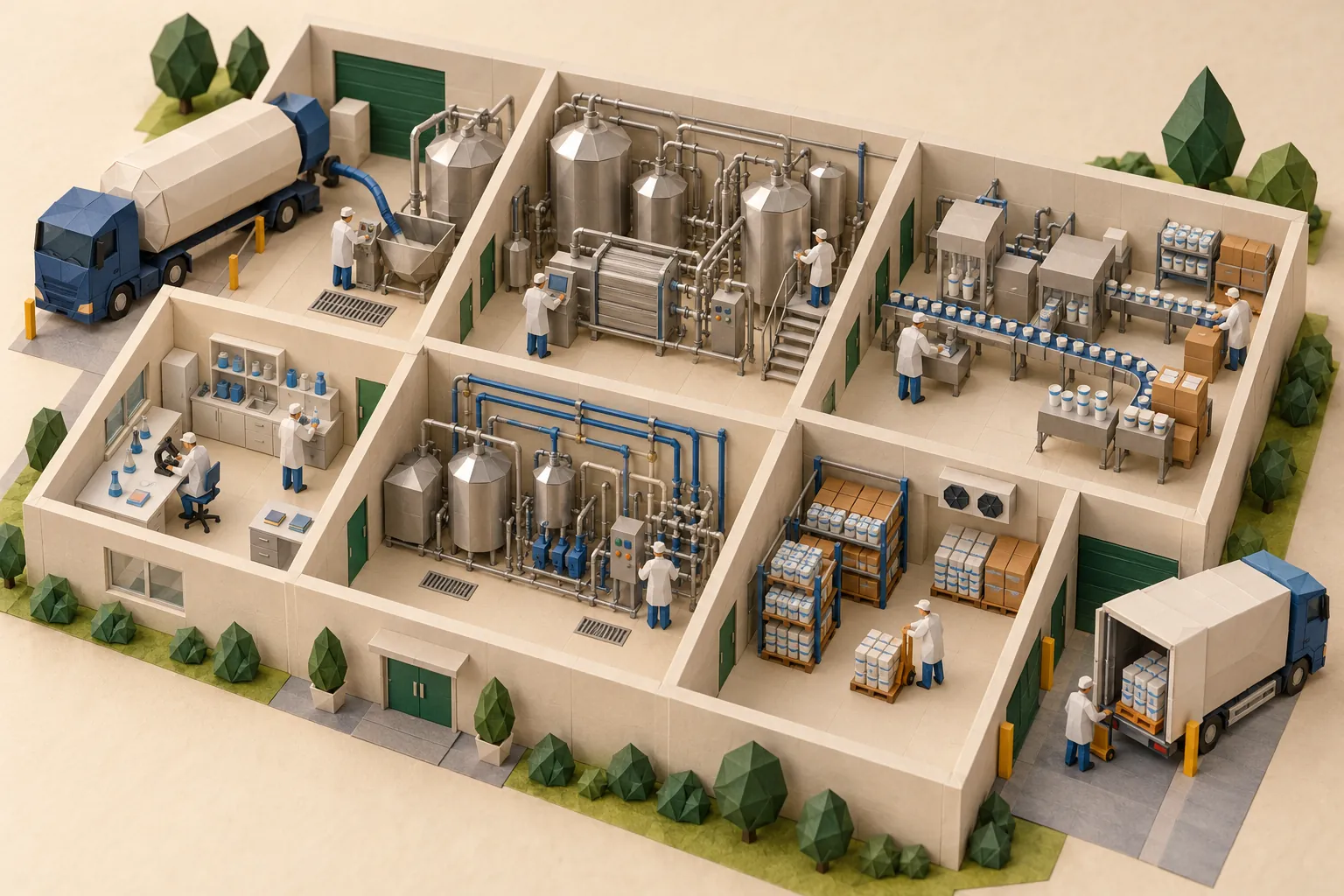 Facility layout
The business plan should identify which skills can be recruited locally, which can be shared between businesses, which require training and which may need international expertise during startup.
For each role, the plan decides which of the four applies.
A national investment brochure cannot tell an investor whether a specific farm has sufficient transformer capacity, whether a factory can obtain the required water flow, or whether wastewater can be treated economically at a chosen site.
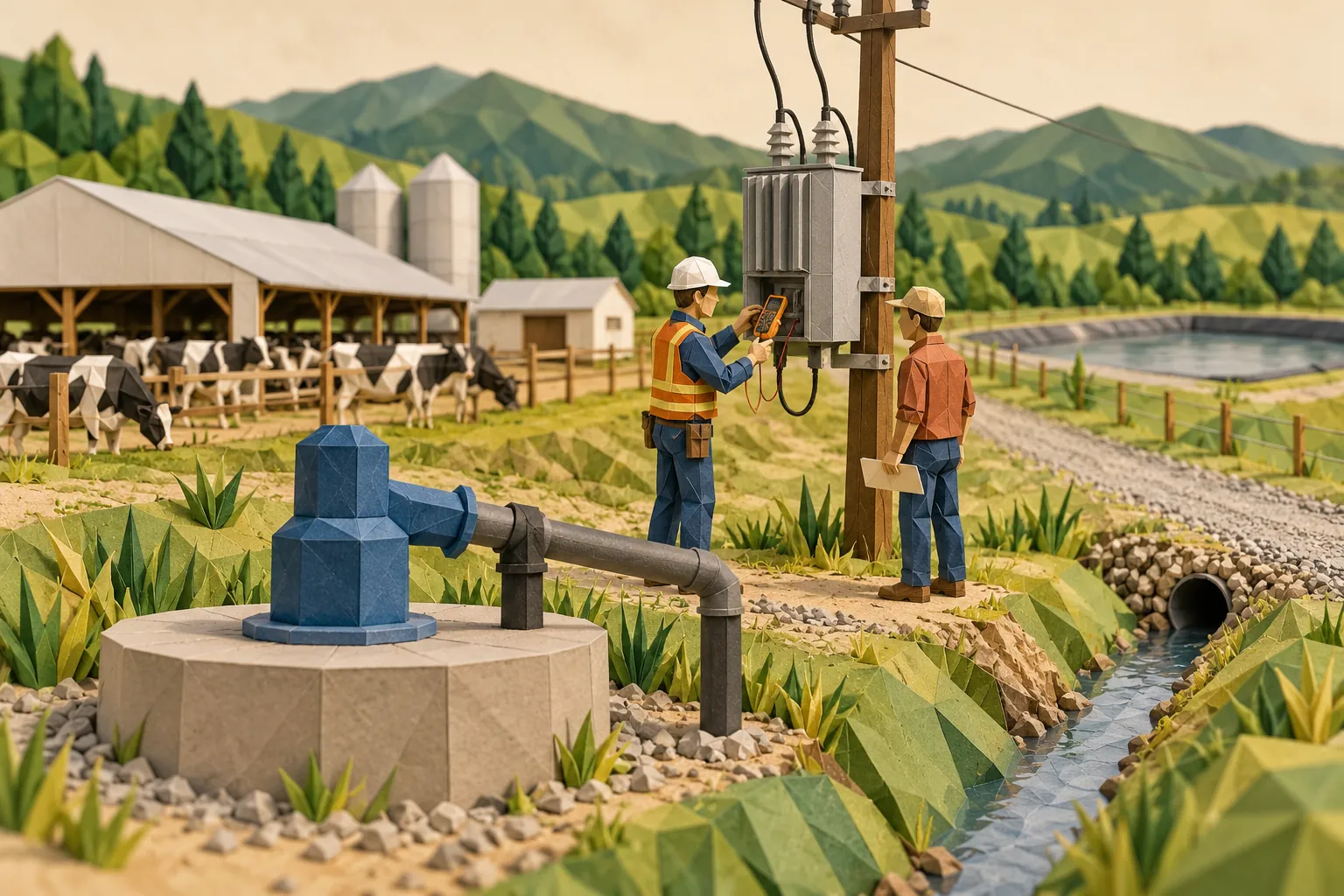
0 of 9 verified for this site
Dairy logistics are time- and temperature-sensitive. Distance to feed, milk sources, processing, cold storage, population centres, borders and ports can materially affect economics.
A farm location is evaluated together with its milk route and its feed route.
The investor owns and actively manages the dairy business.
A qualitative map, not a scale
Current Georgian rules provide an investment residence permit for qualifying foreign investors who make an investment of at least USD 300,000 equivalent in GEL. It is not an immediate permanent-residence grant: the route to an indefinite residence permit comes after five years, if the statutory conditions are met.
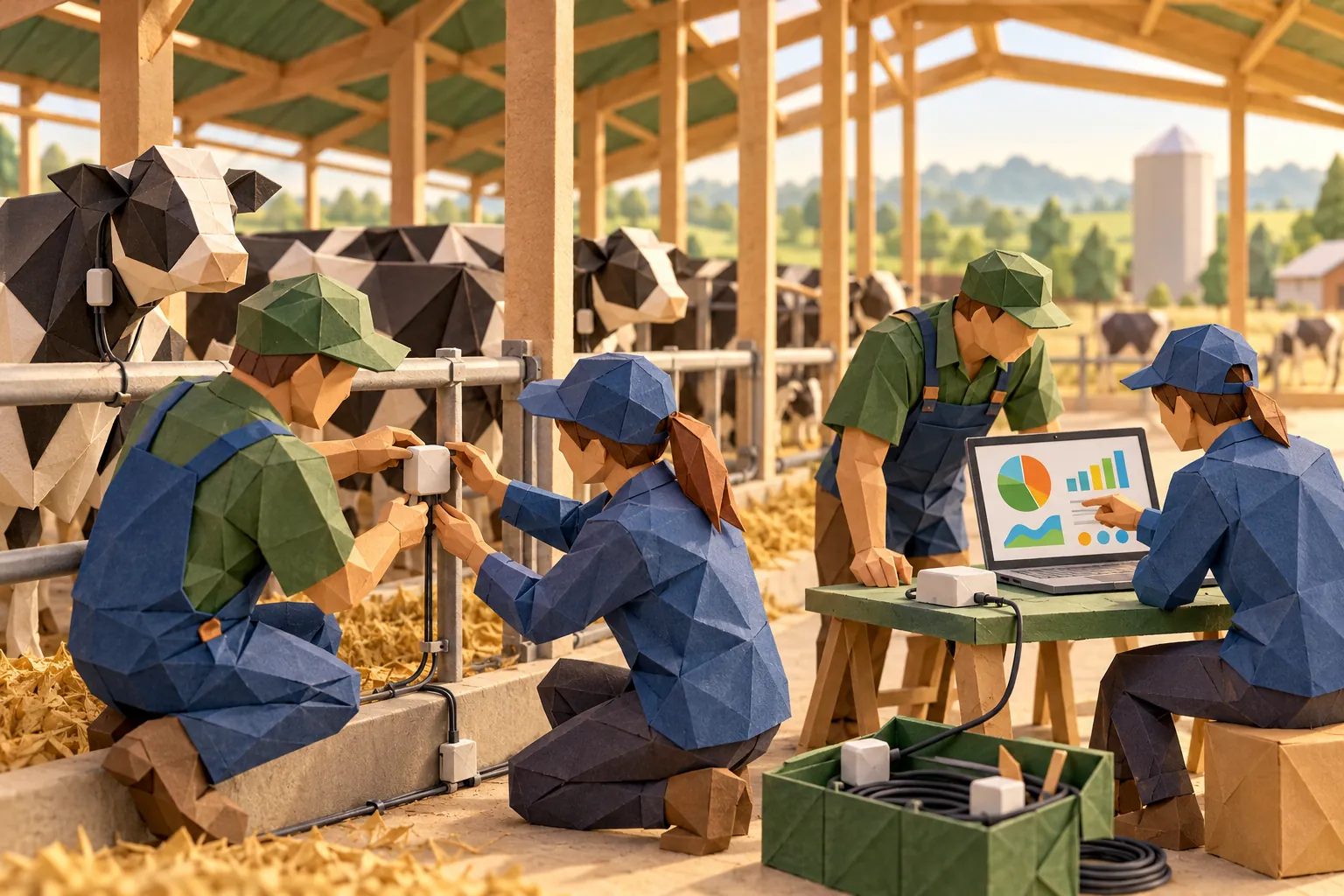
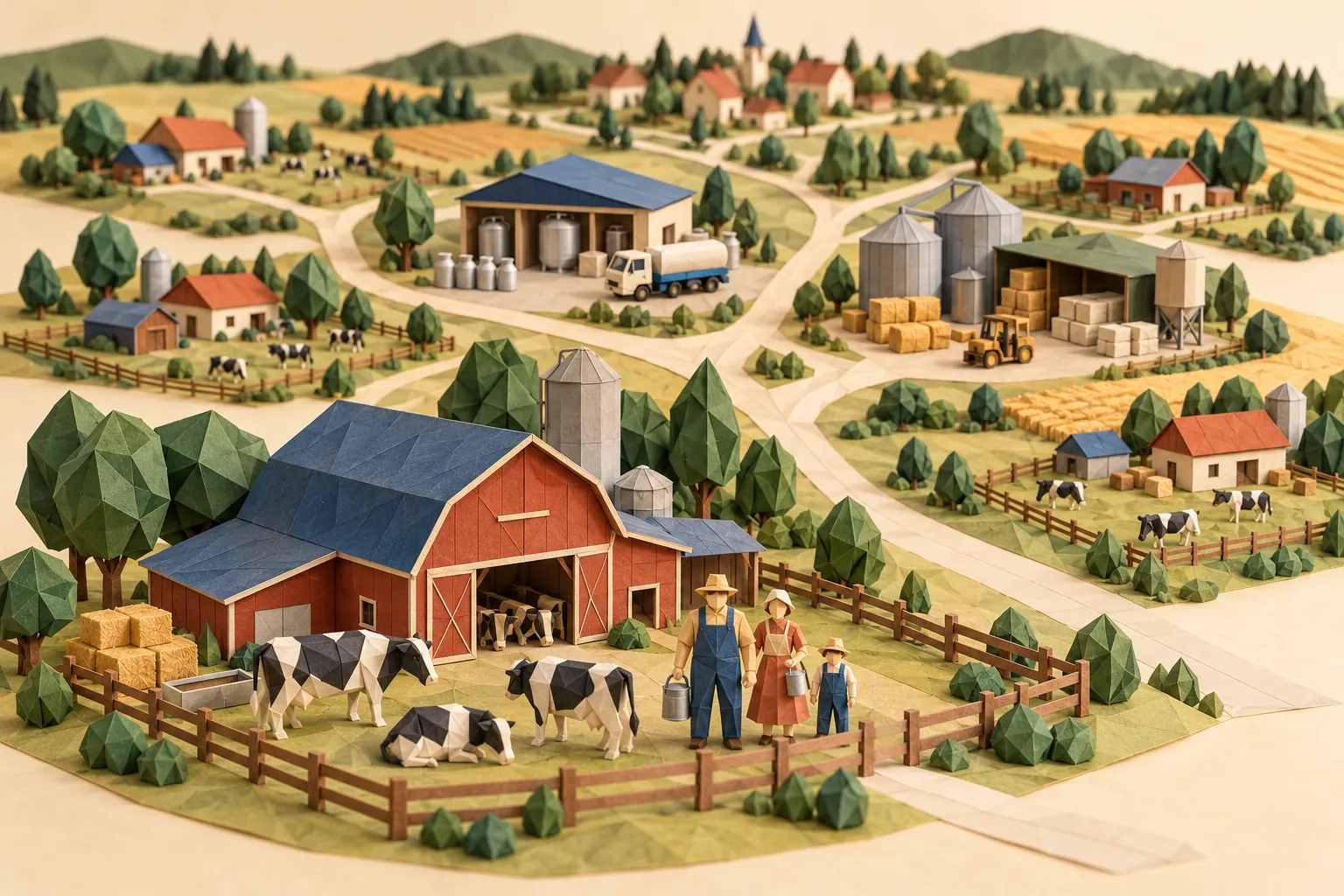
Dairy Grid offers a different investment model from a conventional vertically owned dairy company. Participating businesses are independently owned economic units, but operate within a coordinated network of technical standards, services, supplies, digital systems and market relationships.
The investor participates in a ready business package, not by separately purchasing each embedded GEO Dairy service.
One ready business package
GEO Dairy therefore presents the same underlying business opportunity through different proposal variants when legal, management or financial assumptions differ.
Twelve questions, in order. Together they are the bridge from an interesting opportunity to an investment proposal.
What exactly are you investing in?
Investment opportunities should be assessed against their actual risks rather than relying only on attractive national indicators.
A good country cannot rescue a poorly designed project. A strong project can make much better use of a good business environment.
GEO Dairy classifies investment projects by readiness, from an identified opportunity to a project substantially ready to implement. The same scale can later guide Navigator and investor-facing opportunities.
Opportunity identified
GEO Dairy can connect the different capabilities required to move a project from idea to operation.
Understand the strategic case.
OpenUnderstand how to establish and finance the project.
You are hereUnderstand the national dairy sector.
OpenIdentify where different projects fit.
In preparationGeorgia offers fast business registration, a distinctive corporate-tax framework, active investment institutions and current agricultural support mechanisms. Dairy investors can also access opportunities across farming, feed, processing, logistics, technology and distributed production.
The investment decision, however, should ultimately be based on the project itself: its location, technical design, market, management, capital structure and ability to perform over time.