
Cold Chain Monitoring
& Visibility
Connect temperature and status data from warehouses, vehicles and individual shipments through sensors, recorders, reefer telemetry and monitoring software.
DownstreamLogisticsDistribution / retail

What this equipment
helps you do
match capacity and configuration to the approved operating basis
coordinate machine, utility, control and process interfaces
compare suitable equipment options against agreed requirements
confirm supplier documents, warranty, spares and delivery terms
prepare clear information for installation, acceptance and ongoing support
When you may
need this equipment
a new dairy business or facility is being equipped
existing equipment needs replacement, upgrading or modernization
planned capacity or product changes affect equipment duty
temperature control, storage or delivery handoffs need coordination
procurement needs a defined specification, quotation basis and delivery boundary
What we
define
Operating duty
Required capacity, throughput, operating hours and duty conditions for cold chain monitoring & visibility.
Configuration
Connect temperature and status data from warehouses, vehicles and individual shipments through sensors, recorders, reefer telemetry and monitoring software. The value is in exception visibility and actionable records across handoffs, not just collecting isolated temperature logs.
Interfaces
Available space, utilities, controls, data and connections to existing or planned systems.
Hygiene & safety
Applicable animal welfare, operator safety, cleaning and safe-operation requirements.
Serviceability
Maintenance access, spare-parts availability, warranty responsibility and after-sales support.
Lifecycle fit
Energy, labor, cleaning, downtime and future expansion requirements for the selected configuration.
What you
receive
Equipment Supply Scope
- equipment schedule and proposed configuration for the agreed operating duty
- supplier technical information, options and stated inclusions and exclusions
- space, utility, controls and installation-interface information where available
- quotation basis, delivery terms and project-specific supply boundaries
- manufacturer documentation, warranty and spare-parts information
- handover information for equipment receipt, installation and operation
How the supply
is arranged
- 01
Requirement
Confirm the operating task, duty, capacity, site and project decision.
- 02
Technical basis
Review the approved design, utility availability, hygiene and safety requirements.
- 03
Configuration
Match machines, options, controls and interfaces to the agreed operating basis.
- 04
Supplier review
Compare technical compliance, inclusions, warranty, spares and delivery terms.
- 05
Quotation
Record the proposed configuration, deviations, responsibilities and commercial basis.
- 06
Handover
Coordinate delivery documents and transfer agreed manuals, warranty and support information.
What we may
need from you
- operating objective, target capacity and project location
- storage, delivery route, service level and temperature requirements
- site plans, drawings, photographs and existing equipment details
- hygiene, safety, control and data-interface requirements
- preferred delivery window and budget framework
EquipmentCold Chain Monitoring & Visibility
Dairy Grid: Where This Equipment Is Used
Grid level · Business / unit
- A Family Farm — not used
- B Village Center — not used
- C Municipality Center — used
- Dairy Retail / Dairy House
- Local Dairy Distribution Business
- D Province Hub — used
- Regional Cold-Chain & Distribution Hub
- E Country-HQ — used
- Dairy Grid Digital Platform
Role in the Grid
Cold Chain Monitoring & Visibility is specified for the Municipality dairy retail business, Municipality dairy distribution business, Province Hub cold-chain and distribution hub, Country-HQ digital platform where that equipment duty applies.
Network value
Equipment is matched to unit capacity and interfaces. Common specifications support compatible operation, maintenance, training and spare parts across the network.
Embedded delivery. Within Dairy Grid, this capability is embedded in the relevant Unit/Package or network operating model and is not promoted as a separate add-on to members.
Related solutions
 01Infrastructure supply
Cold Storage Infrastructure
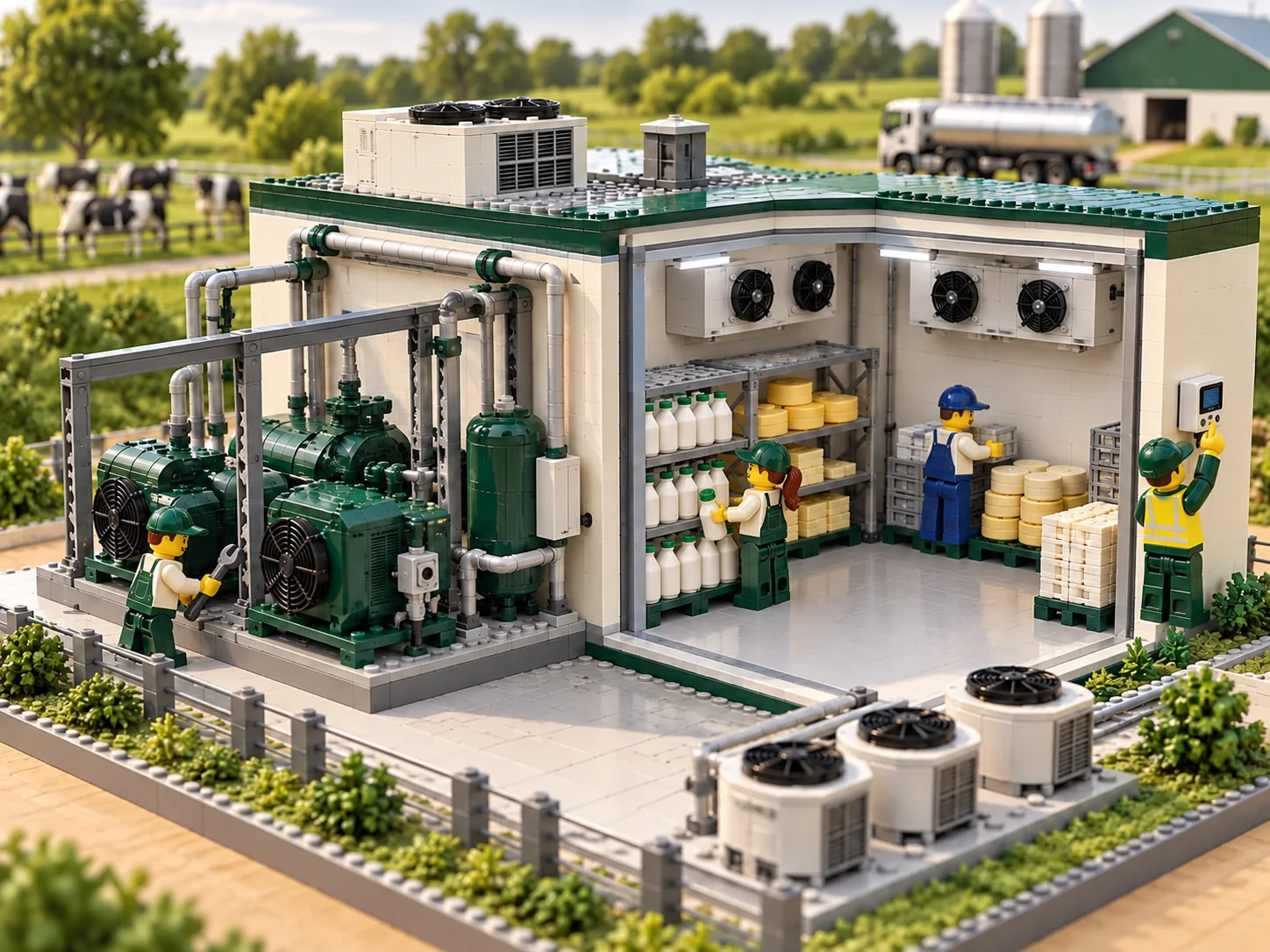
Provide the fixed refrigeration plant/network, evaporators and temperature-monitoring infrastructure required to maintain dairy cold-storage zones.
View supply 02Inputs supply
Cold Chain Shipment Materials
Protect chilled or frozen dairy shipments with selected insulating liners or covers, coolant packs and temperature indicators or loggers.
View supply 03Engineering service
Integrated Cold Chain Design
Design cold-chain continuity across refrigerated facilities, customer/channel interfaces, logistics and temperature-sensitive fulfillment. The service looks beyond individual cold rooms or vehicles to define how temperature integrity is maintained through each handoff.
View service 04Implementation service
Refrigerated Transport Implementation
Deploy a working refrigerated-transport system using reefer vehicles, refrigeration units, temperature monitoring and telemetry. Vehicle and refrigeration setup, monitoring configuration, data visibility and operating readiness are coordinated so controlled dairy distribution can begin with defined temperature and traceability practices.
View service