
Feed Quality
Testing Equipment
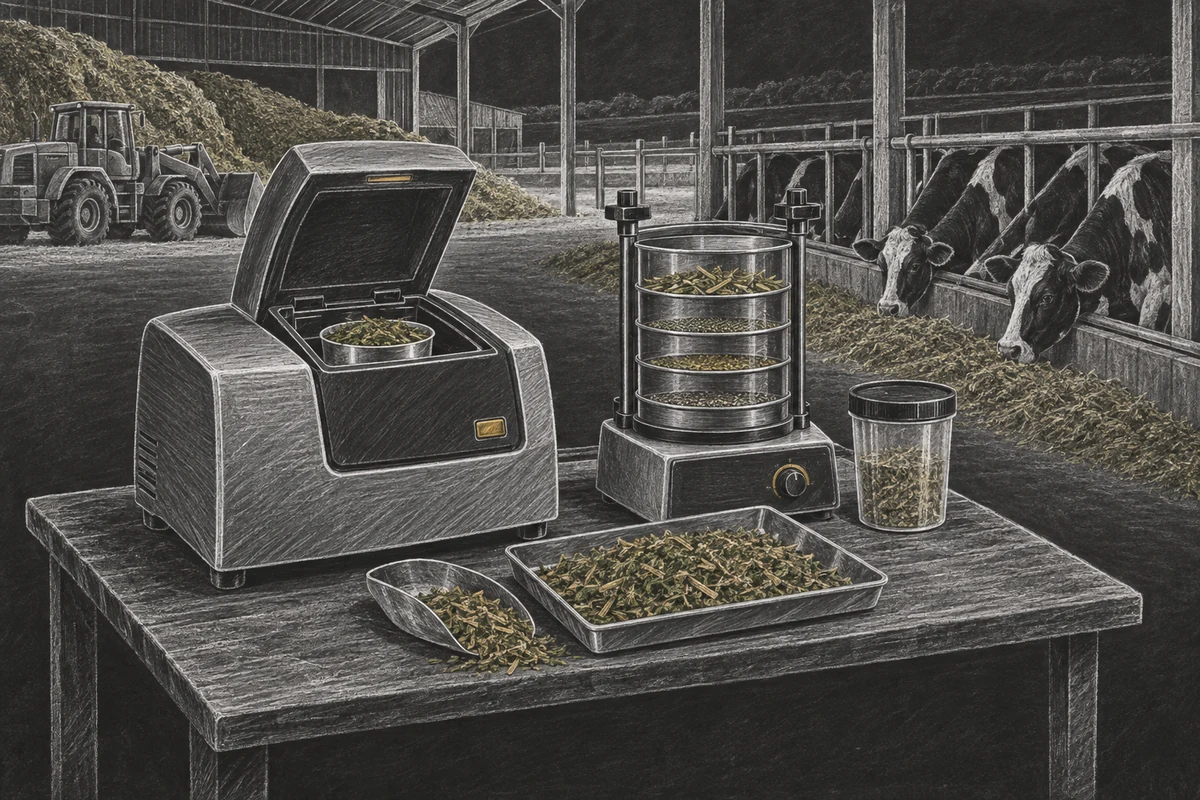
Provide tools for checking forage and feed moisture, composition and physical structure, such as selected NIR analysis, particle separation and sampling equipment.
UpstreamNutritionFarm / shared service
What this equipment
helps you do
match capacity and configuration to the approved operating basis
coordinate machine, utility, control and process interfaces
compare suitable equipment options against agreed requirements
confirm supplier documents, warranty, spares and delivery terms
prepare clear information for installation, acceptance and ongoing support
When you may
need this equipment
a new dairy business or facility is being equipped
existing equipment needs replacement, upgrading or modernization
planned capacity or product changes affect equipment duty
farm, herd or animal-care routines need a better matched equipment set
throughput, product handling, hygiene or quality requirements need to be resolved
What we
define
Operating duty
Required capacity, throughput, operating hours and duty conditions for feed quality testing equipment.
Configuration
Provide tools for checking forage and feed moisture, composition and physical structure, such as selected NIR analysis, particle separation and sampling equipment. The exact kit depends on whether testing is carried out at a farm, a shared feed center or a laboratory.
Interfaces
Available space, utilities, controls, data and connections to existing or planned systems.
Hygiene & safety
Product-contact, cleaning, food hygiene and safe-operation requirements where applicable.
Serviceability
Maintenance access, spare-parts availability, warranty responsibility and after-sales support.
Lifecycle fit
Energy, labor, cleaning, downtime and future expansion requirements for the selected configuration.
What you
receive
Equipment Supply Scope
- equipment schedule and proposed configuration for the agreed operating duty
- supplier technical information, options and stated inclusions and exclusions
- space, utility, controls and installation-interface information where available
- quotation basis, delivery terms and project-specific supply boundaries
- manufacturer documentation, warranty and spare-parts information
- handover information for equipment receipt, installation and operation
How the supply
is arranged
- 01
Requirement
Confirm the operating task, duty, capacity, site and project decision.
- 02
Technical basis
Review the approved design, utility availability, hygiene and safety requirements.
- 03
Configuration
Match machines, options, controls and interfaces to the agreed operating basis.
- 04
Supplier review
Compare technical compliance, inclusions, warranty, spares and delivery terms.
- 05
Quotation
Record the proposed configuration, deviations, responsibilities and commercial basis.
- 06
Handover
Coordinate delivery documents and transfer agreed manuals, warranty and support information.
What we may
need from you
- operating objective, target capacity and project location
- herd size, production targets and farm operating routines
- site plans, drawings, photographs and existing equipment details
- hygiene, safety, control and data-interface requirements
- preferred delivery window and budget framework
EquipmentFeed Quality Testing Equipment
Dairy Grid: Where This Equipment Is Used
Grid level · Business / unit
- A Family Farm — used
- Standard Family Dairy Farm Unit
- B Village Center — used
- Silage Production & Storage Business
- Replacement-Heifer Rearing Business
- C Municipality Center — not used
- D Province Hub — not used
- E Country-HQ — not used
Role in the Grid
Feed Quality Testing Equipment is specified for the Family Farm Unit, Village Center silage business, Village Center heifer business where that equipment duty applies.
Network value
Equipment is matched to unit capacity and interfaces. Common specifications support compatible operation, maintenance, training and spare parts across the network.
Embedded delivery. Within Dairy Grid, this capability is embedded in the relevant Unit/Package or network operating model and is not promoted as a separate add-on to members.
Related solutions
 01Infrastructure supply
Feed Center Infrastructure
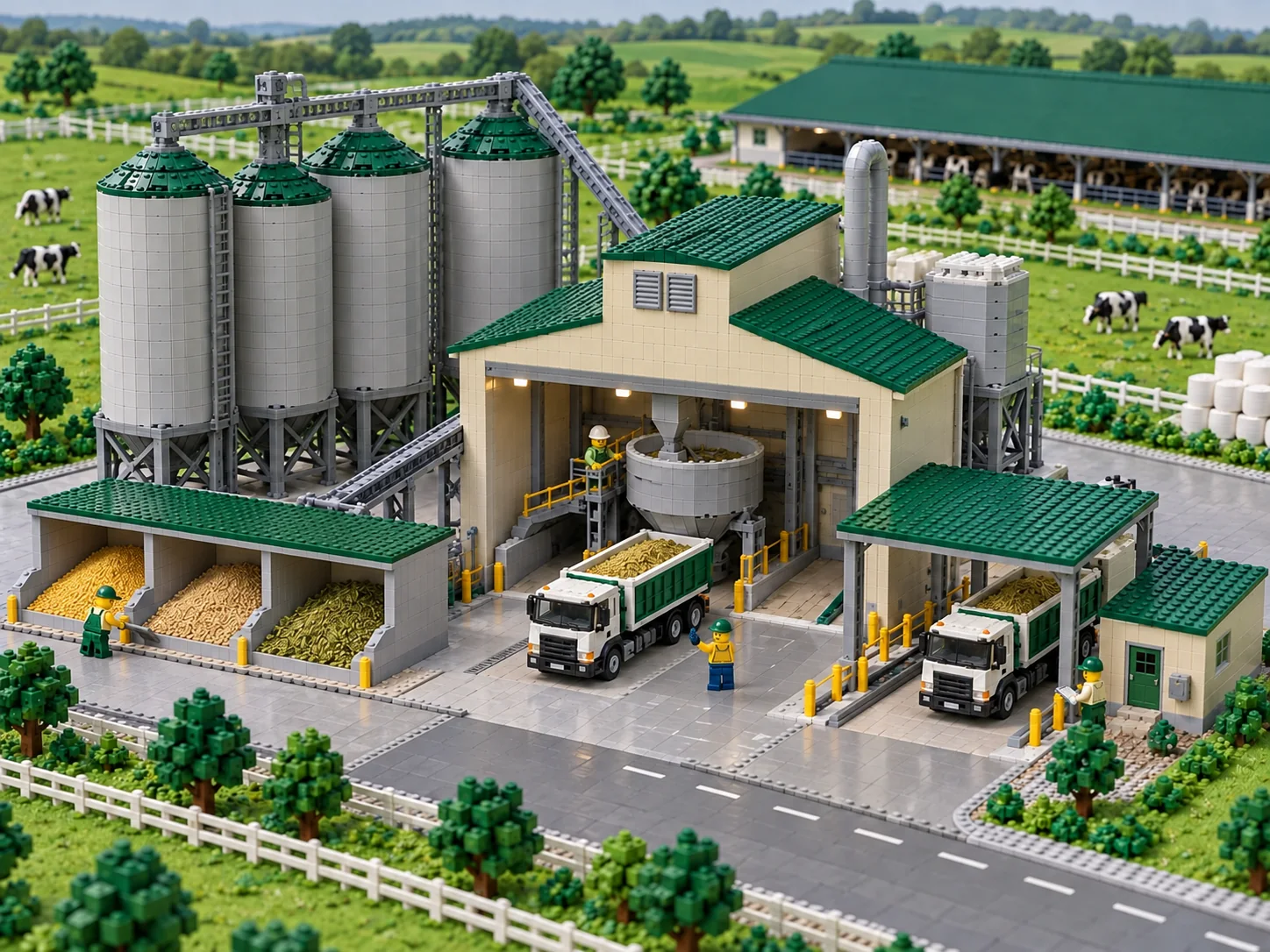
Provide the permanent physical backbone for centralized feed handling: bulk-feed storage, mixing area and loading/dispatch interfaces.
View supply 02Inputs supply
Dry & Transition Feed
Provide the appropriate forage, concentrates and mineral or additive components for dry and transition cow groups, or a prepared ration where specified.
View supply 03Engineering service
Calf Feeding System Design
Design a complete calf feeding program and supporting equipment approach, including milk replacer, milk feeding, starter formulation, weaning and automated feeding where selected. The service aligns nutrition decisions with calf numbers, age groups, labor and the intended rearing system.
View service 04Implementation service
Calf Feeding System Implementation
Put calf feeding into controlled operation by establishing milk or milk-replacer preparation, starter feeding, weaning routines and automated feeder setup where selected. The implementation aligns feeding protocols, equipment use, hygiene, records and staff responsibilities so calves receive consistent nutrition through early growth stages.
View service